
Governor James Orengo’s attempts to reconstitute his Cabinet have collapsed after the County Assembly’s Appointments Committee ruled that resubmitting previously rejected nominees violates the law governing public appointments.
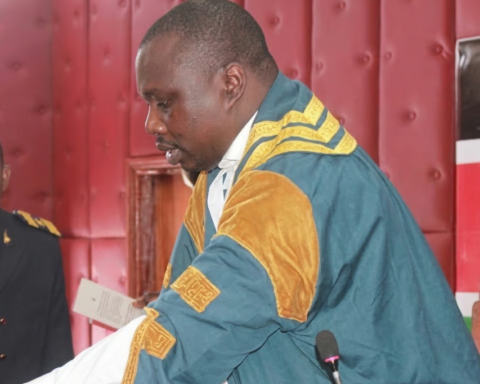
The decision, delivered by Speaker George Okode, marks the latest blow to Orengo’s increasingly embattled administration, which has struggled to maintain functional governance amid mounting legislative resistance.
Okode’s committee declared the nominees ineligible on grounds that the governor failed to demonstrate that circumstances leading to their earlier rejection had changed, a legal threshold required under the County Assembly Approval Act, 2017.
“We are also alive to the fact that the obligations in the Act are bestowed on the appointing authority and not you,” Okode told the nominees during vetting, making clear the committee’s quarrel was with Orengo, not the candidates themselves.
Okode anchored the rejection on Section 10 of the 2017 Act, which mandates that when the Assembly rejects a nominee, the appointing authority must submit a different candidate.
The law permits resubmission of a rejected name only if the circumstances relied on for the rejection of the appointment of the candidate did not exist or ceased to exist.
Reading the statute aloud to the nominees, Okode said the committee had received no evidence that the issues which triggered the initial rejection had been resolved.
“When a nomination of a candidate is rejected by the County Assembly, the appointing authority shall submit to the County Assembly the name of another candidate,” the Speaker intoned, his words effectively shutting the door on Orengo’s Cabinet gambit.
The rejection compounds Orengo’s difficulties in running Siaya County, where legislative-executive relations have deteriorated into open warfare.
Without a full Cabinet, the governor’s ability to execute policy, deliver services, and manage county departments remains crippled. Key portfolios have operated without substantive leadership, leaving civil servants to navigate administrative limbo.
The standoff also raises questions about Orengo’s political calculus. Why resubmit names the Assembly had already rejected? Was it defiance, miscalculation, or a belief that the political winds had shifted in his favour?
Whatever the reasoning, the gamble has backfired spectacularly.
For Siaya, the governance paralysis translates into stalled projects, delayed payments, and a county government that appears dysfunctional.
The Assembly’s rejection of Orengo’s nominees is a vote of no confidence in the governor’s judgment and an indication that the legislature will not rubber-stamp appointments that fail to meet legal and political thresholds.
Okode’s invocation of the 2017 Act also sets a precedent that could constrain future governors tempted to recycle rejected nominees without addressing the substantive concerns that led to their initial rejection.
What Next?
Orengo now faces a stark choice of submitting fresh names that can pass legislative scrutiny, or dig in for a protracted constitutional fight that could further paralyze his administration.
The governor’s allies argue that the Assembly is overreaching, using procedural technicalities to sabotage his administration. Running Siaya County, it turns out, has become a job even a legal titan like James Orengo is finding impossible to manage.