
Never before in our country has it ever occurred that State House and the government of Kenya take responsibility for human rights abuse including jailing and killing many of us who were students opposed to the Moi dictatorship in the 1980’s and beyond.
Being shot dead or getting arrested and taken to Nyayo House in a water cell was just regular for us as student activists against the Moi regime and it was normal work for us to try to save the country from a lunatic dictatorship and no problem paying the price for those of us as Kenyan young patriots. It was just like you have some messed legs and broken bones and it was tough.
The Panel of Experts today on Compensation of Victims of Human Rights Violations has approved compensation amounting to Ksh. 896.1 million for 680 victims affected by human rights violations arising from demonstrations and public protests.
In an update issued on Friday, August, 2026, the panel said the compensation has been disbursed in three phases, comprising Ksh448.7 million in the initial phase, Ksh225.4 million in the second phase and Ksh247.95 million in the third phase.
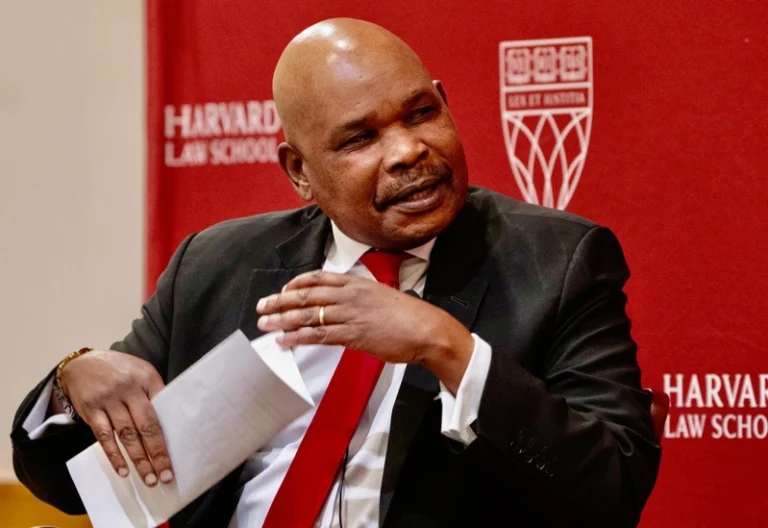
“We remain committed to a victim-centred process conducted with integrity, transparency, and compassion,” the panel said in the statement signed by Chairperson and Principal Coordinator Makau Mutua.
Compensation covers fatalities, injuries and economic loss
According to the panel, the third phase accounted for compensation to 175 victims amounting to Ksh222 million.
The beneficiaries include 50 fatalities compensated at Ksh3 million each, amounting to Ksh150 million. Another 46 victims with severe injuries received Ksh1 million each, while 49 people with moderate injuries were awarded Ksh500,000 each.
The panel also approved Ksh50,000 each for 21 victims with minor injuries and nine claimants under the economic loss category.
In addition, the panel approved compensation for 49 uniformed officers who sustained human rights violations during the period under review.
“In acknowledgement of the dedication by our uniformed officers to protecting the public, the Panel has resolved to grant appropriate compensation for the human rights violations they sustained during the period in question,” the statement said.
The approved claims for uniformed officers include seven severe injuries, 37 moderate injuries and five minor injuries, with the total compensation amounting to Ksh25.75 million.

Claims relating to enforced disappearances are also undergoing investigation and verification in line with the Reparations Guidelines 2026.
The panel further said it had reviewed three claims and reclassified them from minor to severe injuries after examining medical reports and additional submissions.
Following separate reviews, five victims with permanent and life-altering injuries were awarded compensation above the standard scale. The panel said it would recommend to the President that they be enrolled in a government-funded lifetime medical scheme.
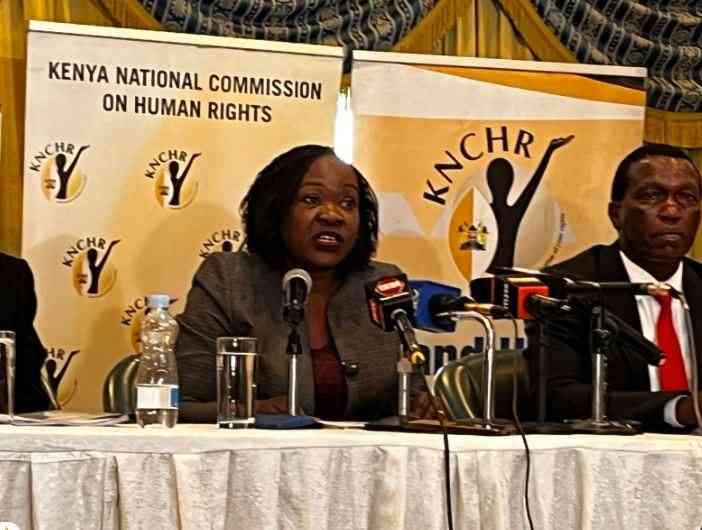
The panel said its offices at the Kenya International Conference Centre (KICC) remain open to receive new claims, noting that the compensation programme will continue on a rolling basis until all eligible victims have been compensated.
I am a very proud supporter of the compensation program for victims of police violence and terrorism in Kenya because I have been one such victim from 1982 when I was just 22 years old and a second year student at Nairobi University as well as the Secretary General of Students Organization of Nairobi University (SONU).
And then I was 26 years old at Mombasa Polytechnic as a lecturer there when they took me to Nyayo House Torture Chambers for three months and then Kamiti Medium Prison for two years and then after that I was forced to a Tanzania Refugee Camp.
My sisters at home wouldn’t give me a break. They wanted to come to Tanzania to see me and take me back home, but they couldn’t make it there.
They told me our mom cannot take the whole thing where a family member is just lost. And my mother was trying to send me food in Dar es Salaam, and it was complicated and I told her I can buy food on my own with other refugees in Dar.
Finally, my mother relaxed and it worked for everybody.
Otherwise, everything was going to have to go through Musoma which is how I got to Tanzania from South Nyanza and Migori and it was funny and tough. I lost all my clothes at the border so when I arrived in Mwanza they gave me shoes and T shirts. I was good to go. That was it for me and no problem.