

Magadi Soda Company, founded in 1911, mines trona from Lake Magadi, in Kenya’s Great Rift Valley
One thing Kenyans including lazy opposition leaders defending Tata ownership of Magadi Soda Company need to know and try to understand is that Magadi Soda Company was established in 1911.
That would be just 15 years after the British Colonials grabbed Kenya in 1896. This was an example of practical economic colonialism at its worst and no Kenya president has bothered to address this economic disaster for Kenya since independence.
Anybody defending this massive exploitation of one of Kenya’s most important national assets needs to find another job to do unless they want to be labourers for the Magadi Ash Company.
The Colonial government which gave Soda Ash from Lake Magadi to the foreign company also gave them 240 acres of land surrounding Lake Magadi for free. In which part of the world does this kind of atrocity happen? And tens of thousands of Kenyans who live in the area have no land for farming to make a living or a place to build their homes.
For more than 115 years Magadi Soda Company has ripped off trillions of dollars from international markets by being one of the biggest companies in the world supplying Soda Ash to make glasses for everything and chemicals used worldwide.
In every aspect the Soda Ash in Lake Magadi is one of the biggest assets any country in the world would have and for Kenya we have Soda Ash in plenty, but it has never belonged to Kenya for more than a century. That is a real shame for the nation.
The heavily saline lake provides one of the purest surface deposits of trona in the world. The company, owned today by Tata Chemicals, a subsidiary of Mumbay-based Tata Industries, manufactures soda ash, the largest manufacturer in Africa.
The Soda Ash is transported to the port of Mombasa by rail, from where it is shipped all over the world.
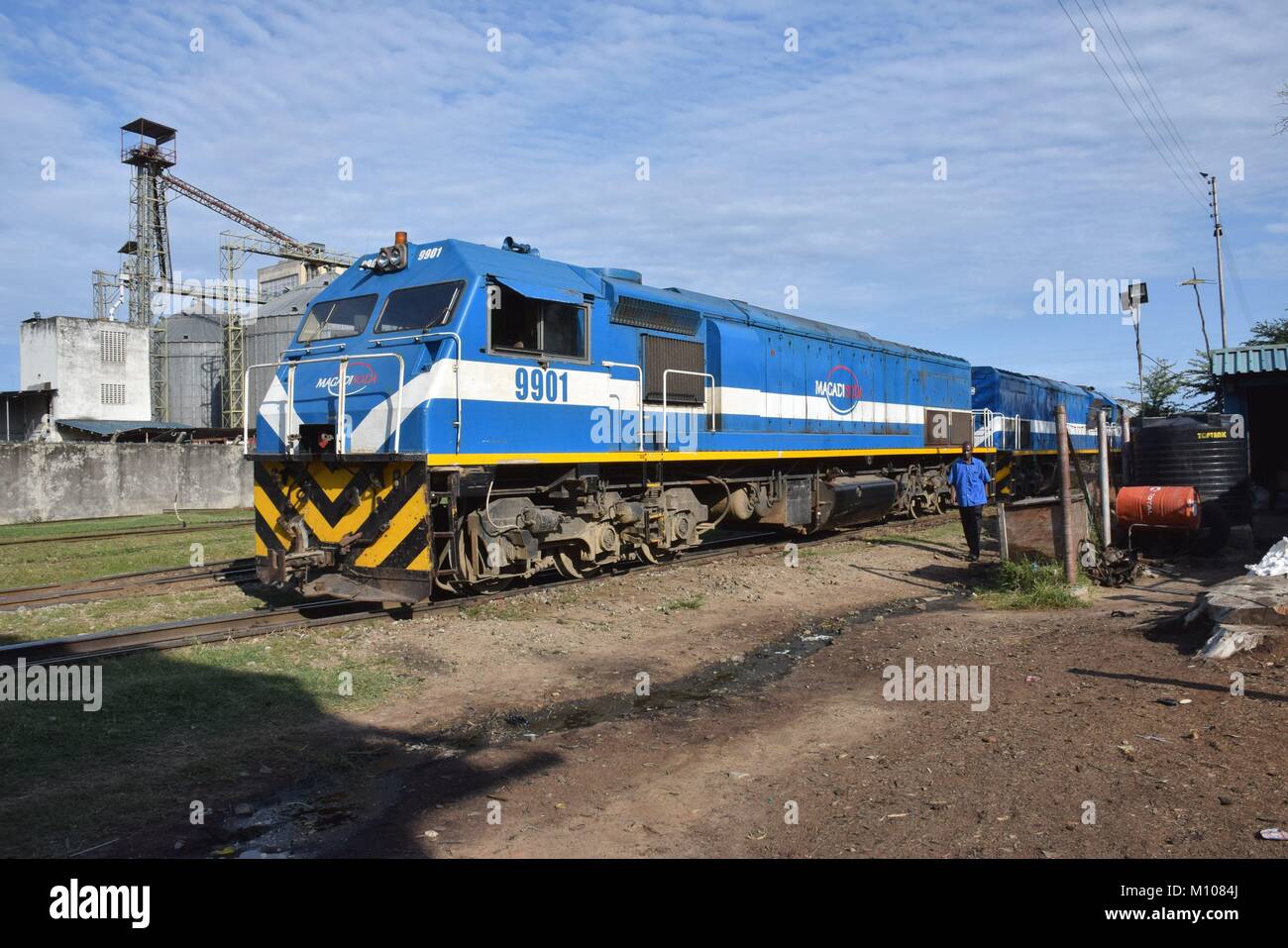
The Magadi Lake Soda Ash which is naturally produced in the lake is one of the most complexities of nature anywhere in the world.
Soda Ash is produced in the lake from the volcanic rocks around the lake and it happens every year when the temperature of the lake goes up to 86 C at which time nobody is in the lake and right after that there is soda ash floating all over the lake and workers pull that out to be packaged for export.
As of right now and for the last 100 plus years once the Soda Ash is rolled out the Tata Company loads it up in the big containers and move to Mombasa port to be sent to Mumbai in India where it is used to make glasses and chemicals sold across the world and they get tons of money while paying pennies for the Soda Ash to Kenya.
Lake Magadi is the southernmost lake in Kenya’s Great Rift Valley, lying in a catchment of faulted volcanic rocks. It is a saline, alkaline lake, approximately 100 square kilometers in size; its surface elevation is 579 meters.

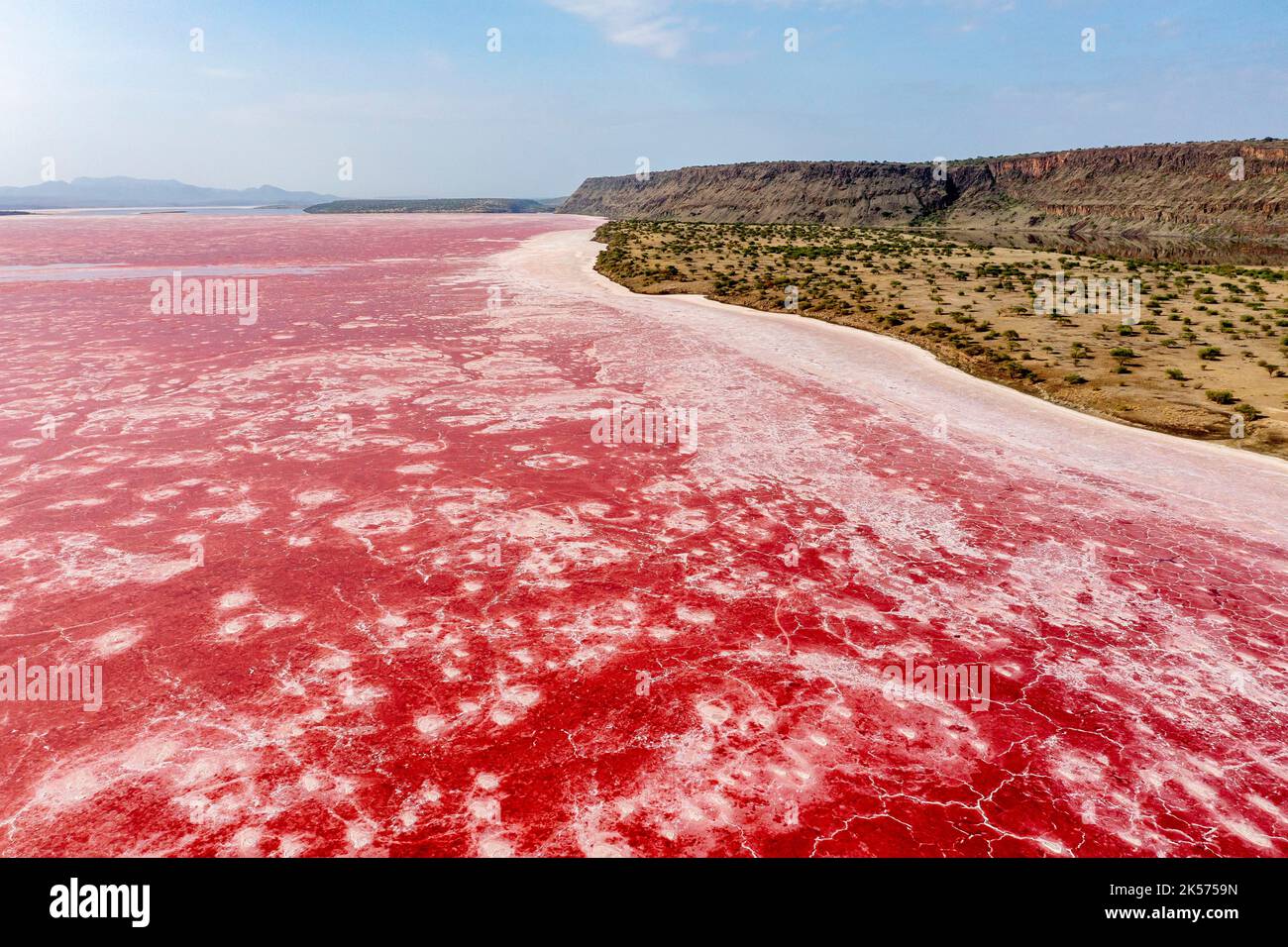
During the dry season, it is 80% covered by soda and is well known for its wading birds, including flamingos. The lake is an example of a “saline pan.” In many places, the salt is up to 40 m thick.
The lake water, which is a dense sodium carbonate brine, precipitates vast quantities of the mineral trona (sodium sesquicarbonate) that is processed into soda ash at the Magadi soda plant and exported all over the world.
The lake is recharged mainly by saline hot springs (temperatures up to 86° C) that discharge into alkaline “lagoons” around the lake margins. There is little surface runoff in this arid region. A single species of fish, a cichlid Alcolapia grahami, inhabits the hot, highly alkaline waters of this lake basin.
This week, President William Ruto ordered a fresh tender for mineral exploitation in Magadi, Kajiado County, opening the resource to multiple investors and requiring them to process the minerals locally.
Ruto said the move was aimed at ending what he described as nearly a century of exploitative extraction in the area, while ensuring that minerals from Magadi generate jobs, industries and wealth for Kenyans.
The President said the new tender would not be limited to a single company, arguing that the mineral resources in Magadi were sufficient to support several investors.
“We are going to advertise afresh so that other companies, not one company, other companies, five, six, 10 companies, can apply because the resource we have in Magadi is big enough to sustain more than one company,” Ruto said.
He said the new contracts would contain strict conditions requiring investors to undertake value addition in Kenya rather than exporting raw materials for processing abroad.
“This time round the contract is going to be firm on making sure that value addition of our minerals of the resource in Magadi is not going to be done abroad. Value addition is going to be done here in Kenya,” he said.
Ruto specifically cited the establishment of manufacturing plants as part of the Government’s plans for the area.
“A glass factory will be done here in Kenya. A chemical factory will be done here in Kenya to hire Kenyan workforce, to use Kenyan resources so that we can grow well and we can create value from the available products,” he said.
The President also announced plans to reduce the amount of land that can be occupied by a mining company in Magadi.
He said no investor would be allowed to occupy the entire 240,000 acres of land associated with the mineral resource.
“No company will occupy 240,000 acres of Kajiado land. They are going to occupy maybe 20, maybe a maximum of 30 per cent. Seventy per cent of that land will come back to the people of Kajiado County,” Ruto said.
The land, he added, could be used for other economic activities and to benefit local communities.
Ruto’s remarks came amid criticism from some groups over the Government’s decision to end the existing arrangement involving Tata Chemicals at Magadi.
He hit back at his critics, accusing them of using the rule of law to defend what he termed an exploitative arrangement.
“There is no rule of law that sustains extractive, exploitative conduct that undermines the interests of the nation or the interests of the people of Kenya,” he said.
“You cannot use the rule of law to protect criminals and characters who are exploiting our citizens and our country.”
The President said Kenya could not claim to be creating jobs while continuing to export raw materials without processing them locally.
“You cannot say in the same sentence that you want us to continue exporting raw materials and at the same time say that we are creating jobs. If you are exporting raw materials, you can never create any jobs,” he said.
Ruto maintained that ending the existing arrangement was necessary to give Kajiado residents and the wider Kenyan economy a greater share of the benefits from the country’s natural resources.
“We have made the right decision to end the exploitative and extractive contract for Tata Chemicals in Magadi, Kajiado County,” he said.
“For nearly 100 years, Kenyans, especially the people of Kajiado, have not received their fair share of the benefits from the minerals extracted from their land. That era is over.”
He said the fresh tender would create greater participation while making local value addition, manufacturing and employment central requirements for successful investors.
Magadi soda could be a game changer for Kenya’s industrialisation
Our resources must build our industries, our industries must create our jobs, and our jobs must create our prosperity

For more than a century, one of Kenya’s most valuable industrial minerals has been extracted from the floor of the Great Rift Valley at Lake Magadi.
We have dug it out. We have processed it to soda ash. We have put it on trains and trucks. We have transported it to Mombasa. And, overwhelmingly, we have shipped it overseas.
Other countries have then used our soda ash to manufacture glass, detergents, chemicals and numerous industrial products – creating factories, jobs, technology and wealth. Then, in some instances, Africa buys the finished products back.
That model must end.
The Government’s intervention at Magadi, and the President’s insistence that incoming investors should establish glass and chemical manufacturing facilities in Kenya, is bigger than Magadi. It raises one of the most important economic questions facing Kenya and Africa today: Why should Africa continue exporting the building blocks of industrialisation instead of using them to industrialise?
WE HAVE EXPORTED JOBS FOR TOO LONG
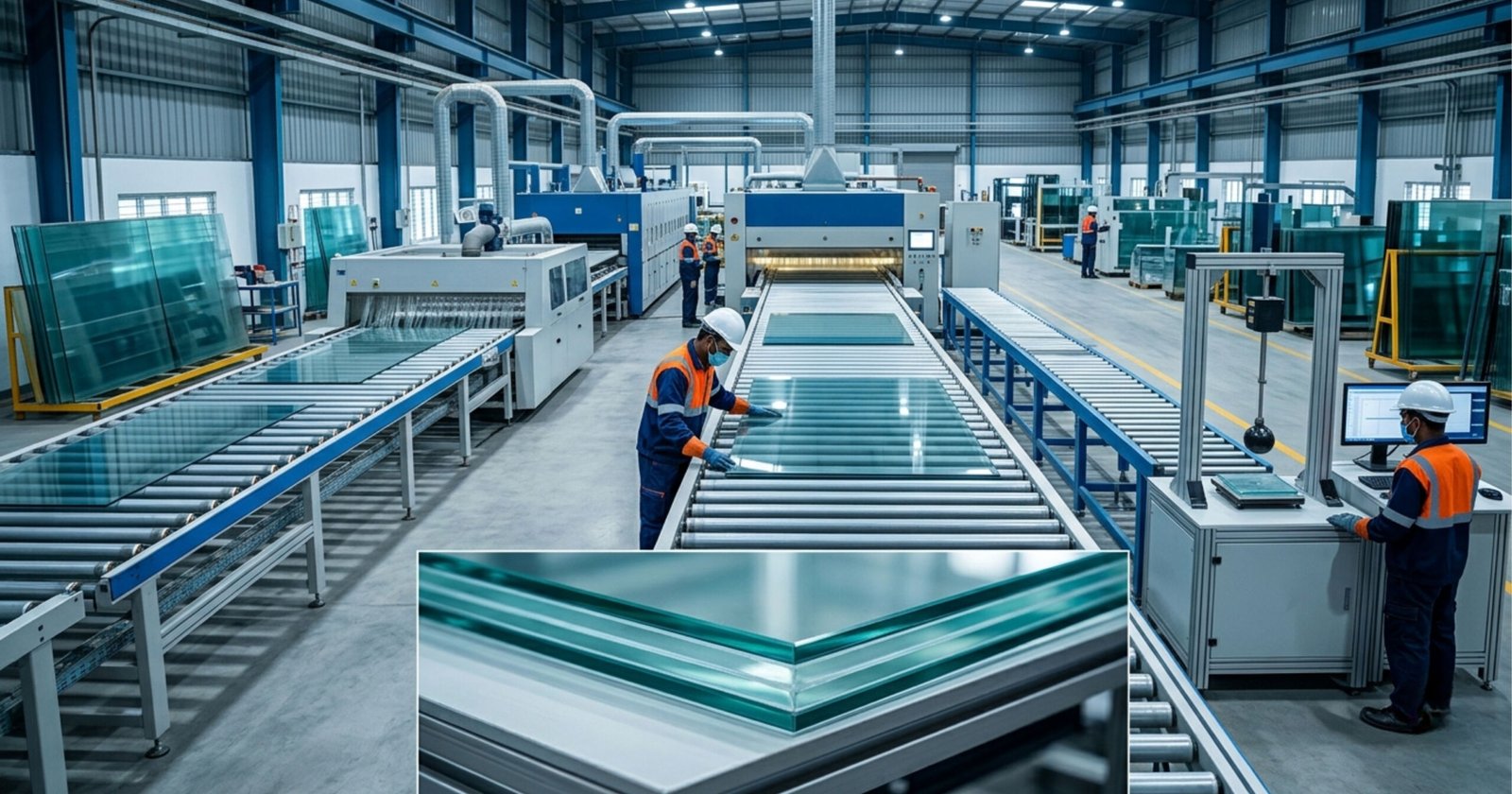
Soda ash is not an ordinary mineral. It is an industrial building block. It is a critical input in glass manufacturing and is also used in detergents, chemicals and numerous industrial processes..
We have effectively been exporting not merely soda ash. We have been exporting potential factories, potential jobs, technology and opportunities for our engineers, chemists, technicians, transporters, entrepreneurs and young people.
Here are some of the glass manufacturing companies in India using cheaply imported Soda Ash from Kenya. It is time for the glass manufacturing to be done in Kenya with the country’s own Soda Ash. What a huge difference that would make for the country?
FROM MAGADI TO AN INDUSTRIAL ECOSYSTEM
The opportunity at Magadi is enormous. Instead of thinking of Magadi merely as a mining operation, we should begin thinking of it as the nucleus of a major Kenyan chemical and glass manufacturing ecosystem.
Imagine a large modern glass manufacturing complex supplied by Kenyan soda ash. Imagine Kenya manufacturing more of the glass required for buildings, windows, bottles, food and beverage packaging, pharmaceuticals, laboratories and other industries. Imagine chemical manufacturers locating close to the raw material.
Around those anchor industries would emerge transport companies, packaging businesses, engineering firms, maintenance companies, laboratories, logistics providers, equipment suppliers and hundreds of SMEs.
That is how industrial clusters develop. One factory creates demand for another. One industry creates capabilities that attract another. One skilled worker trains another. One supplier becomes ten suppliers.
Soon, an area previously known principally for extracting a mineral becomes known for manufacturing products. That should be the future of Magadi. And it should become a model for Africa. Our minerals must become magnets for factories.
MAGADI SHOULD MARK THE END OF AN ERA
Magadi therefore represents something much bigger than soda ash. It represents a choice. For more than a century, Africa’s economic relationship with the world has been dominated by extraction.
We exported gold and imported jewellery. We exported cotton and imported clothes. We exported hides and skins and imported shoes. We exported crude petroleum and imported refined fuel. We exported minerals and imported machines. And at Magadi, we exported soda ash while importing enormous quantities of glass, chemicals and other manufactured products.
Every time we export an unprocessed or insufficiently transformed resource that could competitively support manufacturing at home, we should ask ourselves: How many jobs are leaving the country with that ship? How many factories? How much technology? How much tax revenue? How many opportunities for our young people?
Africa must graduate from being the world’s quarry and farm to becoming one of the world’s great workshops.
OUR RESOURCES MUST BUILD OUR INDUSTRIES
The industrialisation of Kenya will not happen through speeches alone. It will happen when we deliberately connect our natural resources to factories, skills, technology, infrastructure, investment and markets.
That is why the Magadi decision matters. Lake Magadi should not merely be a place where trains leave carrying soda ash towards ships at Mombasa. It should become one of the places where Kenya’s industrial future is built.
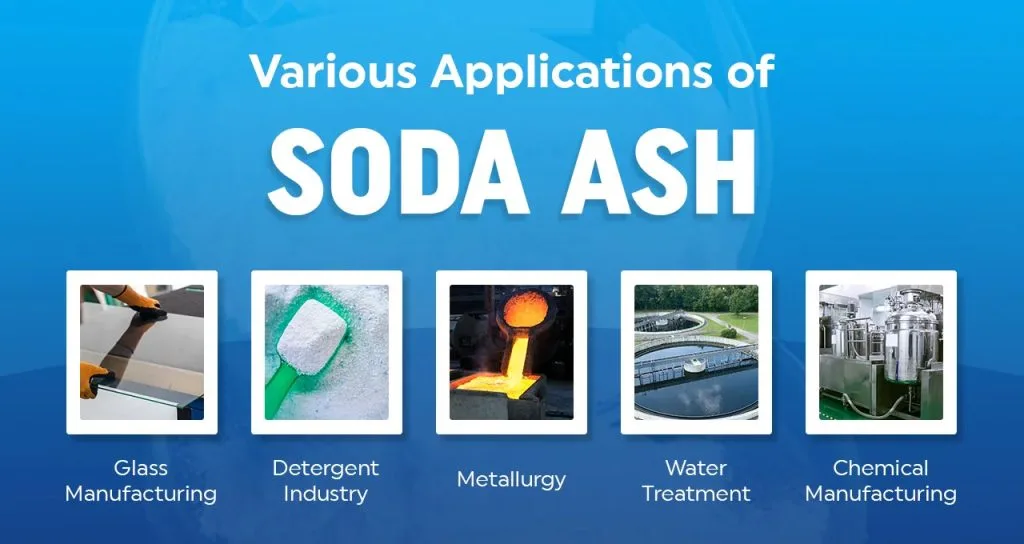
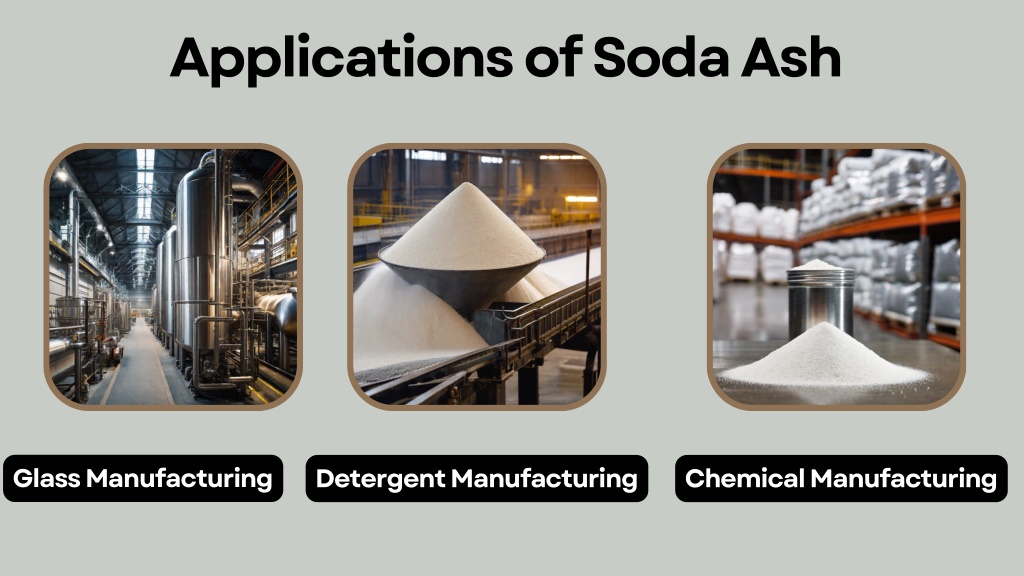
We should see furnaces. We should see glass factories. We should see chemical plants. We should see laboratories. We should see Kenyan engineers. We should see thousands of young people reporting to manufacturing jobs every morning.
And we should see trucks leaving Magadi not merely carrying a mineral, but carrying finished Kenyan products destined for Kampala, Kigali, Kinshasa, Lagos, Johannesburg, Dubai, London, Mumbai and beyond.
That is industrialisation. That is value addition. That is economic sovereignty. And that is how a country becomes prosperous.
President William Ruto is right to insist that Kenya’s natural resources must work harder for Kenyans. The age of simply digging, loading and exporting must give way to an age of processing, manufacturing and exporting finished products.
Magadi can be where that new chapter begins.
Kenya must manufacture. Africa must manufacture. Our resources must build our industries, our industries must create our jobs, and our jobs must create our prosperity.
It is good for Kenya that the boss of the industrialization in the country Juma Mukhwana fully comprehends the complexities involved in dealing with the issue of Soda Ash from Lake Magadi and wants that to be a big foundation of industrialization in the country.
Now he has to come with the practical plans to help President Ruto develop a comprehensive plan to turn the Kenya Magadi Soda gold into a real deal for industrial development in the country.
President Ruto will have to work on this in many angles. Now the president is calling for new tenders for Magadi Soda Ash and the key part of that tender should be that Kenya is not looking for a company from anywhere including inside the country to come to Lake Magadi collect all the Soda Ash and export it as raw product which has happened for 115 years.
The company that will collect the Soda Ash and Package it will sell the raw material to the Kenya government.
The next tender is for glass manufacturers and those capable to make detergents to apply to get contracts to set those manufacturing companies in Kenya.
President Ruto also must look at the very real possibility that a Kenyan company and not some foreign investors can actually harvest Soda Ash from Lake Magadi, process and package the material for industrial use. The Soda Ash in Lake Magadi produces itself by nature and all that is required is to collect the material and it is Kenyan workers who are doing that today. The next step is to process what comes from the lake into Soda Ash.
This is not a massive mining operation where you need huge machines from foreign countries to dig mountains to get Soda Ash. If there is one big economic venture that can be done by Kenyan companies and workers, the Magadi Soda Ash business is the one. Why can’t Kenya try that Mr. President?
After that Kenya will be able to produce glass and everything and a lot of that will be bought by Kenyans who need them and whatever is left will then be exported as finished products not raw materials and that could be a big transformation on how Kenya does business with its key raw products like Soda Ash
Let the country avoid another Kericho tea nightmare where for more than a hundred years Kenya tea is exported raw by British companies and Kenyans are just labourers there to pick tea and get paid pennies living like prisoners in the tea plantations.


And then we have political morons now trying to justify this massive exploitation on Kenya natural resources claiming that stopping gross abuse and exploitation of Kenyans resources will chase away foreign investment in Kenya. It is okay for those politicians because it is expecting too much from them to think they can wake up to reality.
Gachagua may have to take this kind of exploitative investors to Wamunyoro and leave Kenyans alone.
Tata Chemicals row: Gachagua accuses Ruto of driving foreign investors out of Kenya

Former Deputy President Rigathi Gachagua has accused President William Ruto’s administration of creating fear among foreign investors, warning that Kenya could suffer serious economic consequences if investors lose confidence in the country.
Gachagua said Ruto’s administration was now creating a similar atmosphere in Kenya by allegedly targeting foreign-owned businesses and properties.
Investors ‘afraid’ of putting money in Kenya
Speaking from the United States, Gachagua said he had interacted with investors who expressed concern about the business environment in Kenya.
“I am in the United States of America, where investors have categorically told me that no investor can risk investing in Kenya with what is going on in the country,” he said.
The reality on the ground is that President Ruto is blessed with idiotic opposition with no vision for anything in the country. In a situation like this the opposition should have looked at the whole background and circumstances around the Magadi Soda Ash scam by the colonial government and its impact on Kenya. After that the opposition could then come up with their own way of finding better solutions to the problem.
Instead the opposition just jumped in thinking they have something to attack President Ruto about and they have no clue what the whole situation is for the country and more so for the Kenyans who live around this Magadi Soda operation.
The president is taking charge of a terrible problem for the country and he is going to get massive support from Kenyans on what he is doing to deal with the Lake Magadi problem including the 240, 000 acres of land handed to the Tata company for free by the British colonial government.
Ruto also announced that 90 per cent of the 240,000 acres of land appropriated by colonial authorities for Magadi Soda mining will be returned to local communities.
He said the government would accelerate the issuance of title deeds to residents to secure land ownership and unlock its economic potential.
This makes opposition leaders like Rigathi Gachagua roaming around in the USA mad and they are trying to invent their myth that this is just about President Ruto.
Good for the opposition and very good for President Ruto in 2027 when Kenyans will have to look at the reality they face on the ground to make their lives better and the endless myths from the likes of Gachagua and it may not be so hard for them to decide who actually makes sense to them. That is coming heavy down the line.
Other opposition leaders like Edwin Sifuna are claiming exploitation of Kenya resources is protected by the rule of law. Are we talking about British Colonial law
Sifuna accuses Ruto of scaring away investors over Tata Chemicals directive

Nairobi Senator Edwin Sifuna has criticised President William Ruto over his decision to order the closure of Tata Chemicals Magadi, terming the move illegal and warning that it could scare away investors.
Speaking in Bumula, Bungoma County, during a funeral service, Sifuna and members of the Linda Mwananchi movement condemned what they described as state interference with private investors, warning that the trend could hurt the economy if left unchecked.
“Tunataka turudishe utawala wa sheria. Amesimama juzi akasema wale wawekezaji wa kampuni ya Magadi wafunge virago mara moja waende. Mimi nataka vijana wajue serikali nzima haiwezi kuchukua zaidi ya wafanyakazi zaidi ya milioni moja, haiwezekani,” Sifuna stated.
If a foreign company grabbing and sitting on 240,000 acres of land given to them by the British colonial regime in 1911 is the rule of law, does that mean Kenya is still living under colonial law 66 years since Kenya became an independent country?
Maybe such laws can apply to Sifuna, but Kenyans should not be enslaved by British rules and decisions made by the colonialists. At least Kenya is a free country today and can make decisions based on what is good for the country now and not what was good for the British colonial government 115 years ago.
Adongo Ogony is a Human Rights Activist and a Writer who lives in Toronto, Canada