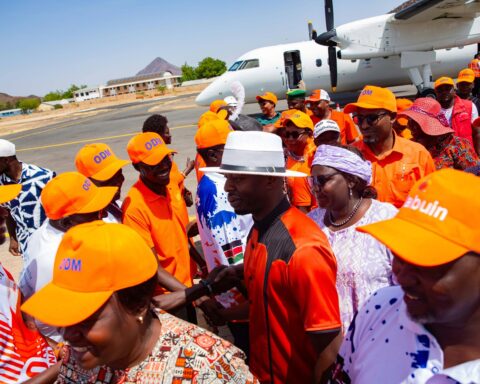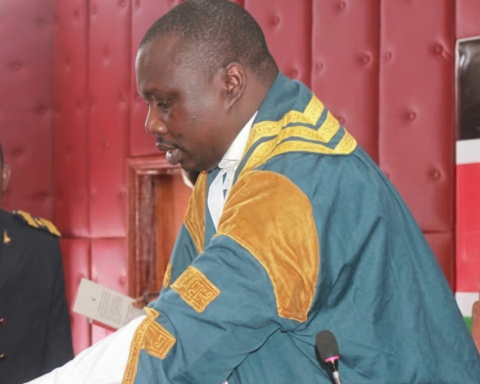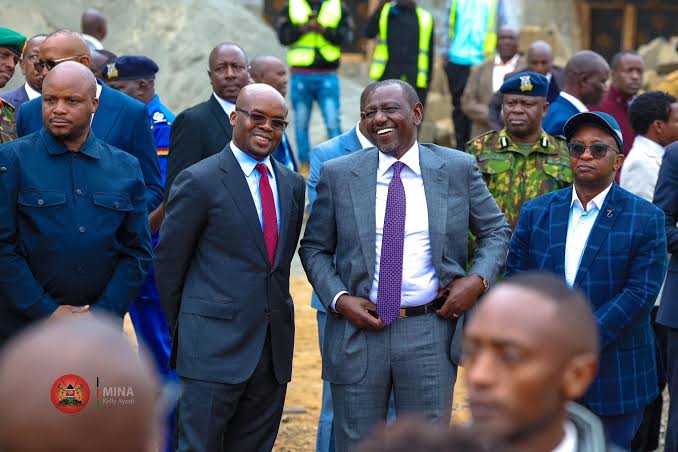

Fresh friction is emerging within President William Ruto’s broad-based government after Interior Principal Secretary Raymond Omollo questioned ODM’s demand for a written pre-election agreement guaranteeing the party an equal share of power in the next administration.
Omollo has cautioned against making a signed pact the basis of political cooperation, arguing that the partnership between Ruto and the late Raila Odinga was founded on mutual trust and shared interests rather than a formal agreement.
Speaking in Ndhiwa, Homa Bay County, the PS said it would be unfortunate for the Luo community to demand written guarantees in exchange for supporting Ruto’s re-election bid, citing the Kalenjin community’s backing of Raila in 2007 without a written agreement.
ODM chairperson and Homa Bay Governor Gladys Wanga, National Assembly Minority Leader Junet Mohamed and Secretary-General Catherine Omanyo are among leaders demanding a 50:50 power-sharing formula covering government positions, appointments and influence in the next administration.
Wanga has declared that if UDA retains the presidency, ODM should provide the Deputy President, while the two parties should share Cabinet positions equally.
The party has argued that its political strength and contribution to Ruto’s re-election campaign must translate into a corresponding stake in government.
The Deputy President’s position has consequently emerged as a major point of contention, with ODM figures including Mining Cabinet Secretary Ali Hassan Joho and Cooperatives Cabinet Secretary Wycliffe Oparanya being mentioned as potential running mates.
The demand puts ODM on a potential collision course with Deputy President Kithure Kindiki, who is positioning himself to retain the running-mate slot, and UDA allies who regard him as central to maintaining the ruling coalition’s support in Mt Kenya.
For ODM, a formal agreement would provide a basis for holding its coalition partner accountable.
For Omollo and other advocates of unconditional cooperation, however, demanding written commitments risks undermining a partnership they argue should be sustained through trust and a shared development agenda.