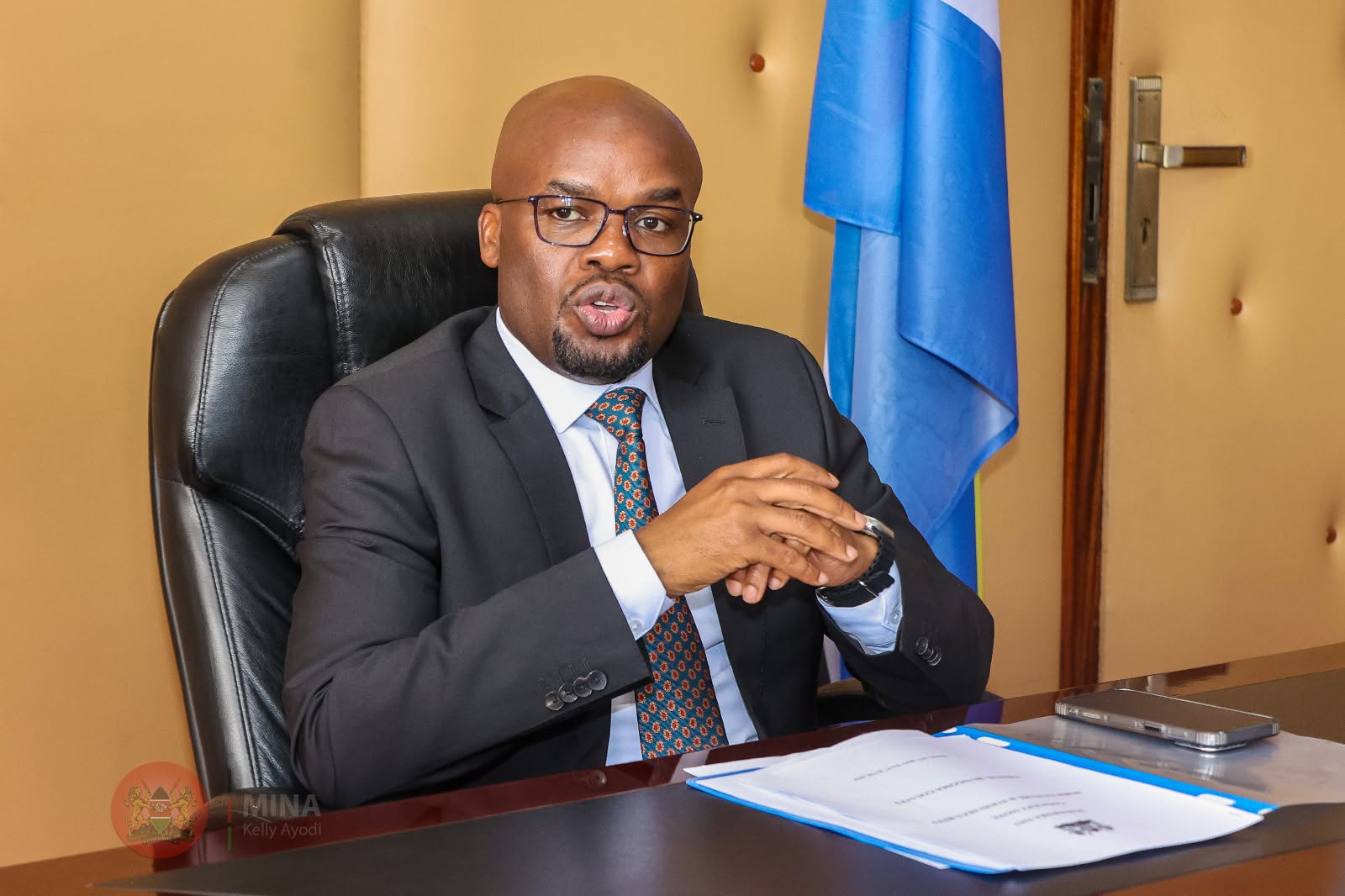
Jubilee Party Deputy Leader Jeremiah Kioni has broken his silence on political betrayal, declaring that his disappointments with former allies will neither embitter him nor force him out of politics as he presses on with his opposition journey ahead of the 2027 General Election.
Kioni, the former Ndaragwa MP, said he had experienced betrayal in his political career but maintained that such setbacks were part of the political journey and should not be mistaken for a reason to surrender.
“I have been betrayed but that is no reason to be bitter or give up. It is not the end of the road. Jubilee found me in politics and my journey continues,” he said during a Tuesday morning interview.
But beyond his personal experiences, Kioni turned his attention to the growing divisions within the United Opposition, warning that competing political interests and unresolved leadership questions could derail the coalition’s attempt to unseat President William Ruto in 2027.
He argued that the opposition’s singular focus on removing Ruto had created a political vacuum in which individual ambitions were being neglected, pushing some politicians towards alternative formations to secure their political futures.
“We’re focused on removing Ruto but ignoring politicians’ individual ambitions. That’s why many are joining DCP to safeguard their political careers,” he said.
In a pointed assessment of the coalition’s internal power dynamics, Kioni questioned the growing influence of former Deputy President Rigathi Gachagua, arguing that the United Opposition was increasingly being defined around one political personality rather than a collective leadership arrangement.
“The United Opposition is now being defined by Rigathi Gachagua,” he observed.
The Jubilee deputy leader cautioned against concentrating too much political authority in one individual, warning that such an arrangement could undermine internal democracy, accountability and the coalition’s ability to accommodate competing interests.
“To deal with bullies, don’t concentrate power in one person. Create a broader space where people can weed out those with bad intentions,” he said.
His remarks point to a deeper concern within sections of the opposition over the emerging balance of power, particularly as political formations manoeuvre to position themselves ahead of negotiations over the coalition’s presidential ticket and other key positions.
Kioni also took aim at what he described as the growing personalisation of Kenyan politics, lamenting that political personalities were increasingly overshadowing questions of leadership performance, development and public accountability.
“We’ve shifted from track records to personalities while Kenyans’ issues remain unresolved. Political cults are growing and accountability must come through the ballot,” he said.
He maintained that the opposition could not build a credible alternative to the Ruto administration by relying solely on personalities, political loyalty and the mobilisation of grievances.
Instead, he called for a broader political conversation anchored on accountability, performance and the everyday concerns of Kenyans.
Kioni’s intervention comes at a delicate moment for the opposition, with competing political ambitions, leadership disagreements, and questions over who should carry the coalition’s presidential ticket threatening to complicate efforts to build a united front against Ruto.
For Jubilee, which continues to position itself within the opposition’s broader political calculations, Kioni’s remarks also underscore the party’s insistence that the struggle against the Kenya Kwanza administration must not become the preserve of one political individual.