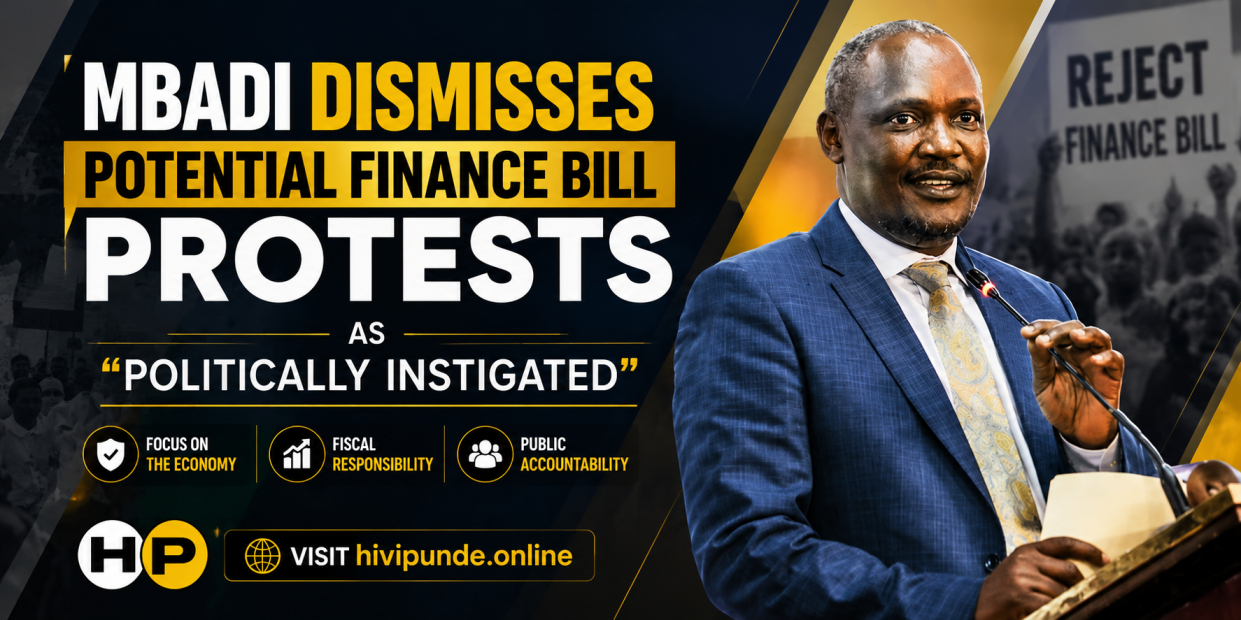

Treasury Cabinet Secretary John Mbadi has declared that any protests arising from the Finance Bill 2026 would be politically motivated rather than genuine expressions of public discontent.
Speaking on political analyst Herman Manyora’s YouTube podcast on Wednesday, June 10, 2026, the eve of the budget reading, Mbadi defended his stewardship and rejected the notion that demonstrations would reflect failure in his role.
“I would not feel like I’ve let down the country; I would obviously know that that is politically instigated and not based on any facts, not based on my performance as a minister, because, Professor, before generating the Finance Bill, I held no less than 17 engagements across the country,” Mbadi stated.
Extensive Consultations Cited
The Treasury boss emphasized that the bill was developed following comprehensive public participation, with more than 17 engagement forums held nationwide to gather stakeholder input.
He acknowledged that Northern Kenya, specifically Garissa, was the only region not included in the consultation tour.
Mbadi pointed to the contentious mitumba (second-hand clothing) taxation issue as evidence of his ministry’s consultative approach.
Following stakeholder engagement, the government reached a consensus to introduce a single five percent tax on profits from the business, replacing what traders had described as oppressive multiple levies.
Misunderstanding or Miscommunication?
The Cabinet Secretary suggested that many Kenyans have misunderstood the proposed tax changes, insisting that mitumba traders themselves were satisfied with the negotiated agreement.
His comments come as the country awaits the formal presentation of the Finance Bill 2026, which will outline the government’s revenue-raising measures for the upcoming fiscal year.
The bill has historically been a flashpoint for public demonstrations, particularly following widespread protests against previous finance bills.
Mbadi’s pre-emptive dismissal of potential protests as politically motivated sets the stage for what could be a contentious budget season, with critics likely to challenge both the substance of the bill and the adequacy of public consultation.