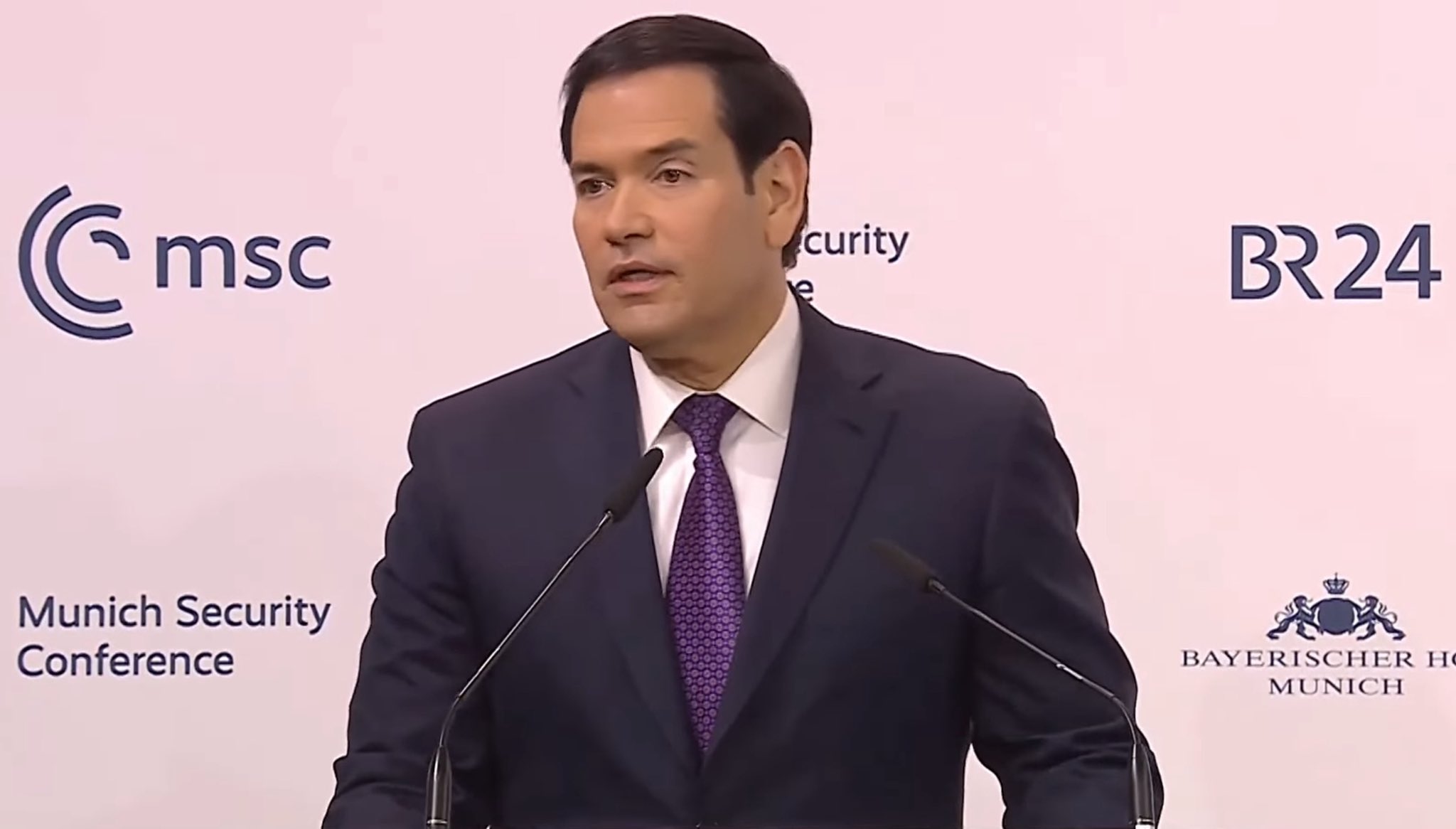


At the Munich Security Conference, U.S. Secretary of State Marco Rubio delivered what may be one of the most explicitly pro-colonialist speeches of the 21st century.
In a moment that stunned observers across the Global South, Rubio openly praised Western colonialists for “settling new continents” and “building vast empires extending out across the globe.” His remarks, met with a standing ovation from European leaders, revealed a chilling nostalgia for empire, and a clear signal of Washington’s intent to reassert Western dominance over the Global South.
Rubio’s speech was not merely rhetorical flourish.
It is a manifesto for a renewed imperial project.
He lamented the decolonization movements of the 20th century, portraying them as the work of “godless communist revolutions” and “anti-colonial uprisings” that supposedly plunged the world into chaos. In his words, the decline of Western empires was a tragedy, not a liberation.
This framing turns history on its head, erasing centuries of exploitation, slavery, and violence that underpinned the so-called “great Western empires.”
By calling for North American and European powers to unite in order to reverse “the West’s managed decline” and “renew the greatest civilization in human history,” Rubio effectively issued a call to arms for a new colonial order.
This language, invoking “dominance,” “civilization,” and “renewal”, echoes the same paternalistic justifications used by imperial powers to subjugate Africa, Asia, and Latin America for centuries.
The implications are unmistakable. The U.S. empire, facing economic competition from China and political resistance from the Global South, is seeking to reassert control through a new form of economic and political recolonization.
What Washington has done to Gaza, Venezuela, and Cuba, through sanctions, blockades, and military support for oppressive regimes, it now seeks to replicate on a global scale.
African leaders are already responding.
Speaking at the African Union summit, South African President Cyril Ramaphosa warned against a “new colonialism” emerging under the guise of Western partnership.
He urged African nations to stop exporting “rock, soil, and dust”, a reference to the continent’s vast mineral wealth, and instead build industries that allow Africa to trade on its own terms. Ramaphosa’s message was clear: Africa must not be drawn back into dependency by a West nostalgic for empire.
Rubio’s speech exposes the ideological core of U.S. foreign policy in the post-Cold War era. A belief that Western civilization has a divine right to rule. It is a worldview that sees the Global South not as equal partners, but as territories to be managed, resources to be extracted, and populations to be disciplined. The standing ovation in Munich was not just applause for Rubio’s rhetoric; it was an endorsement of a shared imperial ambition.
The Global South, representing the vast majority of humanity, must recognize this moment for what it is: a declaration of intent. The struggle for sovereignty, economic justice, and self-determination is far from over. The colonial mindset that once carved up continents is alive and well, only now it wears the suit of diplomacy and speaks the language of “renewal.”
History has shown that empires fall, but the ideas that sustain them often linger. Rubio’s speech is a reminder that the fight against colonialism is not a chapter closed, but a battle still being waged. In boardrooms, in summits, and in the rhetoric of those who would see the world once again divided between rulers and the ruled.