
Reparations framework honours Raila’s legacy, says KNCHR chair Ogangah
Deaths during protests could attract Sh2.5 million compensation under new KNCHR proposal
Victims of police brutality, torture, enforced disappearances and deaths during demonstrations could receive compensation of up to Sh2.5 million under a new framework unveiled by the Kenya National Commission on Human Rights (KNCHR).
The proposed reparations model seeks to establish a structured compensation system for victims of human rights violations, while strengthening accountability and ensuring those affected receive recognition, justice and restitution.
Under the framework, violations involving the right to life would attract the highest payouts.
Victims of fatal police shootings, deaths in custody and deaths during demonstrations would be entitled to a minimum compensation of Sh2.5 million, in addition to medical expenses incurred before death.
Victims of enforced disappearances would receive at least Sh1.5 million plus medical expenses, while survivors of torture would be compensated a minimum of Sh2 million alongside reimbursement of treatment costs.
The commission has also proposed compensation for violations involving the right to freedom and security.
Victims who suffer severe physical injuries would receive a minimum of Sh1 million plus medical expenses, while those with moderate injuries would be awarded at least Sh500,000 and medical costs.
For minor injuries, the proposed minimum compensation is Sh50,000 in addition to medical expenses.
Victims of arbitrary arrest and detention would also be entitled to a minimum of Sh50,000.
Sexual violence survivors would receive significant compensation under the framework.
Victims of aggravated sexual violence would qualify for at least Sh2 million plus medical expenses, while survivors of rape, defilement and sexual assault would receive a minimum of Sh750,000 alongside treatment costs.
The proposals also seek to cushion victims who suffer economic losses due to human rights violations.
Individuals whose businesses are disrupted or destroyed would be entitled to a minimum compensation of Sh100,000.
According to KNCHR, the compensation schedule is intended to create clear standards for redress, guarantee adequate restitution and reinforce the principle that human rights violations carry legal and financial consequences.
The recommendations come amid growing calls for justice for victims of police brutality, enforced disappearances, torture and abuses linked to demonstrations and security operations.
If adopted, the framework could become a benchmark for courts and government agencies when assessing compensation claims.
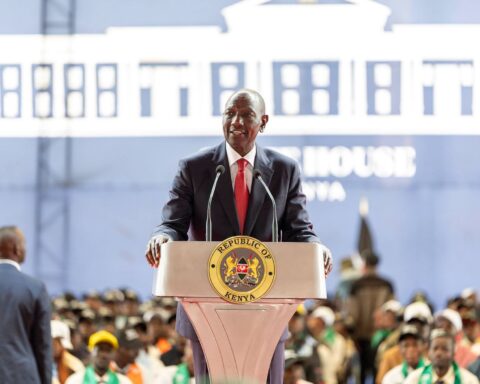
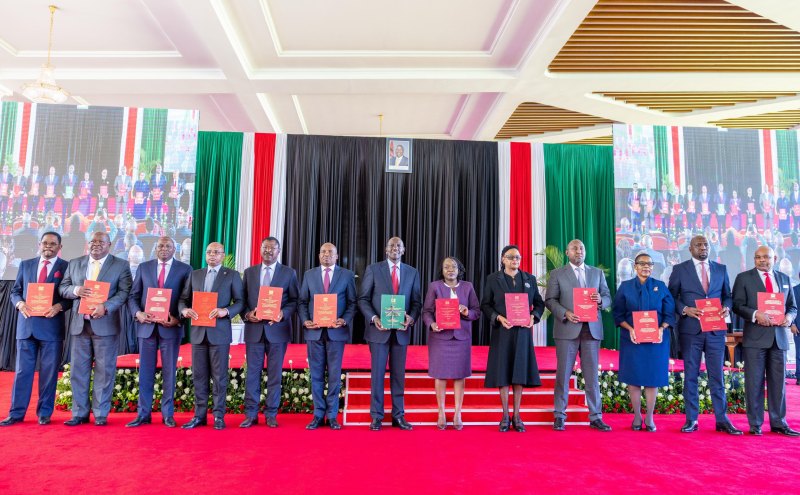
The proposals were unveiled at State House, where President William Ruto acknowledged Kenya’s long and troubled history of violence during public protests.
Speaking after receiving the KNCHR report on the Framework for Compensation and Reparations for Victims of Human Rights Violations During Protests and Picketing, Ruto said successive governments had failed to adequately address the issue.
“For far too long, whenever Kenyans have exercised their constitutional and democratic rights to assemble, picket, demonstrate and petition, the outcome has too often been marked by violence, injury, loss of life, destruction of property, bitterness, and division,” Ruto said.
The President also acknowledged instances where security agencies have been accused of using excessive force during demonstrations, leading to violations of rights and loss of life.
“In some instances, the response of our security agencies to public demonstrations has involved excessive force, resulting in further violations of rights and, tragically, the loss of innocent lives,” he said.
Ruto noted that despite years of condemnation by leaders across different administrations, the problem had remained unresolved.
“For decades, successive generations of leaders have condemned these tragedies. Yet, despite those condemnations, we have not fundamentally resolved this challenge largely because it is neither simple nor easy to do,” he said.
He said the government had now resolved to take concrete action, warning that failure to address the issue would have far-reaching consequences for the country.
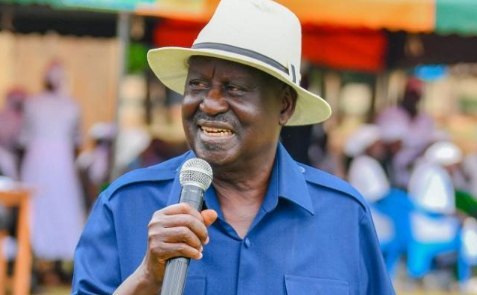
The Kenya National Commission on Human Rights (KNCHR) has supported the government’s proposed reparations framework, with chairperson Claris Ogangah saying its implementation would honour the legacy of former Prime Minister Raila Odinga and strengthen efforts to address historical injustices in the country.
Speaking at State House, Nairobi, during a high-level engagement on justice and accountability, Ogangah said Kenya could not meaningfully discuss human rights and reparations without recognising Raila Odinga’s longstanding advocacy for victims of rights violations.
“His consistent advocacy for the respect of human rights and reparations for victims of violations has significantly contributed to sustaining this important national conversation,” Ogangah said.
Ogangah described the late opposition leader as deeply passionate about confronting Kenya’s past, saying his work focused on both justice and national healing.
“He addressed human rights violations as a critical step in confronting the historical, socio-economic and political challenges that have continued to affect our beloved nation,” she said.
She said the current reparations initiative should be seen as part of honouring him.
“So today’s event, your excellency, is therefore the greatest tribute we can have as a nation to the late Raila Odinga, and implementing the recommendations is an honour to his legacy,” Oganga said.
Turning to the government, Ogangah praised the administration’s push to formalise the framework, saying it reflected a serious commitment to justice and accountability.
“Your Excellency, your bold and deliberate decision to require this reparations framework demonstrates a profound understanding that the state’s obligations to victims must be fulfilled through structured, principled and time-bound action grounded in law, policy and institutional commitment,” she said.
The chair said lasting peace and unity could only be achieved if past injustices are acknowledged and addressed.
“This truly reflects our national moral obligation and profound need for justice, accountability, reconciliation and national healing,” Ogangah said.
“It recognises that sustainable peace cannot be built upon unaddressed grievances and that genuine unity requires acknowledgement of past wrongs, restoration of dignity to victims and a collective commitment to ensuring that such violations never recur.”
Ogangah affirmed the commission’s readiness to support the process, saying it had embraced its responsibility with seriousness and commitment.
“The commission accepted and embraced this responsibility with utmost humility, seriousness, unwavering resolve and above all, a deep sense of national duty and commitment to justice,” she said.
KNCHR documents 1,815 rights abuse claims, verifies 1,101 victims for reparations
The Kenya National Commission on Human Rights has documented 1,815 claims of human rights violations linked to protests and unrest, with 1,101 victims so far verified and cleared for possible compensation under the government’s reparations framework.
In a statement shared on its X account on Monday, June 15, 2026, KNCHR said the commission received 1,022 claims from Independent Policing Oversight Authority and additional cases from the Ministry of Interior and National Administration as part of the verification process.
“Through this process, the Commission has so far verified and obtained consent from a total of 1101 victims across six categories of violations,” KNCHR stated.
The commission said the verified cases span six categories, including violations of the right to life, sexual violence, torture, freedom and security of the person, property destruction and enforced disappearances.
According to KNCHR, 473 victims were verified under freedom and security of the person, making it the highest category among the documented violations.
The commission also recorded 245 victims under the right to life, 138 cases involving destruction of property, 135 victims of torture, 75 sexual violence cases and 35 cases of enforced disappearance.
Only gross rights violations will qualify
The latest update comes as KNCHR clarified that not everyone affected during demonstrations between 2017 and 2025 will qualify for compensation under the government’s Ksh2 billion reparations programme.
Speaking earlier at State House, Nairobi, KNCHR Chairperson Claris Ogangah said the compensation framework only targets victims of gross human rights violations linked to state actions.
“The commission did this, acknowledging that not all cases reported to the commission qualify as gross human rights violations for reparations,” Ogangah said.
Government sets aside Ksh2B fund
The verification process comes shortly after President William Ruto announced that the government has already allocated Ksh2 billion towards compensation and reparations for victims of verified harm arising from protests and unrest.
KNCHR said the verification exercise was guided by the “reasonable basis to believe” evidentiary standard, consistent with international human rights practice, as the country moves toward implementing the compensation programme.
Adongo Ogony is a Human Rights Activist and a Writer who lives in Toronto, Canada