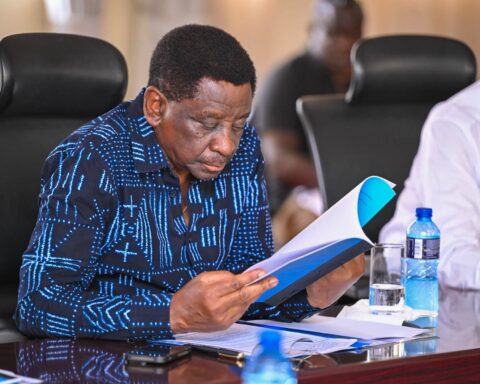

The Kenyan opposition to the Ruto government is in a complete mess and that is because I do not want to say they are in deep shit which is exactly where they are chilling right now, but we need to be nice to these opposition fellas. They are busy building a road to nowhere and that can be tough as they know by this time.
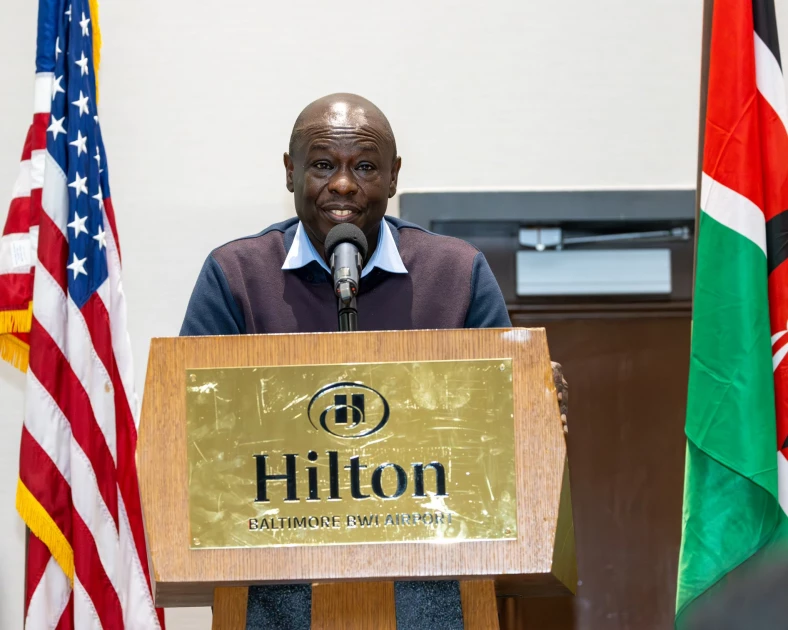

The opposition boss Rigathi Gachagua is in the USA trying to get votes for the opposition among diaspora Kenyans and anybody who lives out here like me knows that the Diaspora Vote plan has been a complete fiasco. Maybe with luck there could be 10,000 votes coming from outside Kenya and that cannot even win you an MCA job in Nairobi.
Gachagua is wasting his time and that of the opposition as a whole and he knows that, but he would care less because he owns the opposition and Kalonzo and the others can dance around when he is in the USA but nothing happens until he comes back.
Edwin Sifuna is on a run to join the race for the opposition presidential candidate and it looks pretty good for him but all that means nothing until Gachagua makes his call which may be for Sifuna or against him but he is not Gachagua’s biggest worry as an upcoming politician because Gachagua has dozens of those in his DCP party already.
Speaking to Kenyans living in Dallas, United States, the Democracy for the Citizens Party (DCP) leader compared the current opposition realignment to the events of the 2002 General Election, when the opposition united behind former President Mwai Kibaki but one of the presidential contenders, Simeon Nyachae, declined to join the arrangement.
Gachagua said the current political developments reminded him of the events preceding the 2002 election, when leaders opposed to then President Daniel arap Moi sought to unite behind a single candidate.
“Just the way William Ruto’s people are talking, it is the same way Daniel arap Moi’s supporters talked in the 2002 elections,” Gachagua said.
He recalled a meeting at Uhuru Park where opposition leaders rallied behind Kibaki under the slogan “Kibaki Tosha”, signalling their decision to support him as the presidential candidate.
“At Uhuru Park, there was a meeting and it was declared ‘Kibaki Tosha’. There was one opposition presidential candidate and Simeon Nyachae walked away. Nyachae went alone,” he said.
Gachagua said he expected a similar development to unfold ahead of the 2027 election, as opposition leaders seek to agree on a single candidate to challenge Ruto.
“I want to prophesy today, not because I am a prophet but based on experience, foresight and understanding Kenyan politics, history will repeat itself,” he said.
“One presidential candidate will be announced, one person will go away. That one person will go away on his own.”
“Riggy G will be part of the winning team. This is because Riggy G will not be that fellow who will walk away; he will stick with the arrangement that has been agreed upon by the people of Kenya.”
“I may not talk for other people because people may let you down. I want to speak for myself and say that if it is not me, I will support whoever will be picked as the opposition flagbearer unconditionally,” he said.
Dangote reveals products planned for Lamu refinery
The real nightmare for the opposition right now is that while they are engulfed in useless side shows and internal power struggles, President William Ruto has just started one of the biggest investments for industrialization ever in the history of Kenya as a country with limitless possibilities for economic growth and industrial jobs in numbers never seen in Kenyan history.
What can possibly go wrong with that if Kenyans work hard to make sure this industrial revolution in Kenya takes off and reaches its maximum ptotential?


In the media today, Africa’s richest man, Aliko Dangote, has revealed plans for his group’s proposed refinery in Lamu, saying the facility will produce a range of petroleum and industrial products for Kenya and the wider East African market.
Speaking on Citizen TV’s Explainer ahead of the refinery’s launch, Dangote said the facility will produce jet fuel, diesel and petrol, while also supplying raw materials to the plastics industry and other manufacturers.
He said the refinery will also produce polypropylene, which will be supplied to plastic manufacturers, as well as base oil for industrial use.
Dangote said the project will go beyond petroleum products, with plans to increase power generation as part of a wider industrialisation programme.
“We are not only supplying jet fuel, diesel, and gasoline, which is PMS that you use in your car. We are also supplying the plastic industries,” Dangote said.
He said the group would also produce polypropylene and base oil, adding that it was looking at opportunities to contribute to increased power generation in Kenya.
The billionaire said the refinery is part of a wider investment programme that will see his group invest about $16 billion in Kenya.
He described the planned investment as the largest investment by an African investor in Africa, saying Kenya remains one of the group’s most important markets outside Nigeria.
“Just this funding alone is $16 billion, and is the largest investment that an African invests in Africa,” he said.
Dangote also explained why his group settled on Lamu after initially considering Mombasa and Tanzania’s Tanga as possible locations for the refinery.
He said Tanga had initially been considered because of its connection to the pipeline carrying Ugandan crude, but the group later identified Lamu as a more suitable location.
According to Dangote, Lamu offered adequate water, sufficient sea depth and enough land for the planned development.
He said the refinery could become the centre of a much larger industrial complex, with significant activity expected in the area once the project is completed.
“When you go to Lamu, you will see that it is totally different. It will have more activities than any industrial centre in Kenya,” he said.
Dangote also addressed the question of where the refinery would source its crude, noting that Kenya and Uganda are expected to begin producing oil, while other countries in East Africa could also become suppliers.
He said the refinery would therefore have access to crude from the region as production increases.
“Kenya will start producing crude very soon. Uganda is going to start very soon, and other neighbouring countries too in East Africa will start producing their own crude,” he said.
The proposed refinery is expected to serve markets beyond Kenya, with Dangote saying the group is looking at the wider East African market for its petroleum and industrial products.
He also linked the project to efforts to address Africa’s power deficit, saying inadequate electricity remains one of the factors slowing industrial growth on the continent.
Dangote said he was in discussions with leaders in Kenya and other African countries on ways of mobilising resources for increased power generation.
He said the group plans to invest about $50 billion in industries over the next four years, including projects aimed at expanding power generation.
Dangote said the scale of the planned development would become clearer as the project progresses, arguing that Lamu could experience significant economic activity within four to five years.
Adongo Ogony is a Human Rights Activist and a Writer who lives in Toronto, Canada