NG-CDF rolls out QR code to boost project tracking and accountability
It is incredibly good for Kenyan voters that, for once, they may have a chance to actually monitor the projects that their MPs claim to have achieved in their constituencies through the soon-to-be-launched NG-CDF Electronic Monitoring system.
For all practical purposes, CDF has been pocket money for MPs, and they grab it with no shame at all because nobody can catch them in the process of wiping out all CDF money into their bank accounts.
MPs also use all forms of fake contractors who are allocated huge sums of CDF money to build something in a school or hospital. That money is for the MP, and what they do is get back 90% of the CDF money given to the contractor and allow them to keep 10% for themselves, and no project is done whatsoever.
This is normal work for the MPs, and that is their main job while in office, and going to parliament is completely unnecessary for them because there is no money for them there.
These are the same MPs who scream every day on TV about how badly the national government is doing in terms of development. Not one MP will tell Kenyans what they are doing for their constituents at home because all they do there is steal the CDF.
The National Government Constituencies Development Fund (NG-CDF) Board has introduced a Quick Response (QR) Code system to improve transparency and real-time monitoring of projects across the country’s 290 constituencies.
The initiative was tabled in Parliament on Thursday, July 2, 2026, by the Chairperson of the NG-CDF Committee, Musa Sirma Eldama Ravine, Member of Parliament (MP), alongside the Schedule of Budget Ceilings for the 2026/2027 Financial Year.
Sirma said the QR code system will strengthen accountability, close information gaps, and enable members of the public to monitor NG-CDF projects in their constituencies more easily.
Speaking after the tabling, NG-CDF Board Acting Chief Executive Officer Benjamin Magut described the system as a major step in improving service delivery.
“The QR code is more than a piece of technology,” he said. “In embracing this QR code system, the NG-CDF Board is not just digitising a process; we are opening a door. A door through which accountability walks in, and bureaucracy walks out.”
Budget allocation for 2026/2027
The launch comes as the NG-CDF Committee presented the Fund’s budget ceilings for the 2026/2027 financial year.
The Fund has been allocated Ksh61,797,700,000, representing a 5.1 per cent increase from the previous allocation of Ksh58,797,000,000.
Out of the total allocation, Ksh3,089,885,000, equivalent to five per cent, has been earmarked for the Board’s administration and operations. The remaining Ksh58,707,815,000 will finance constituency development projects.
Each constituency will receive an equal allocation of Ksh151,830,556, amounting to Ksh44,030,861,250 nationally under the equal share component.
An additional Ksh14,676,953,750 has been set aside for the ward-based allocation, which will be distributed based on the number of wards in each constituency.
Sirma urged Members of Parliament to submit their project proposals for the 2026/2027 financial year by July 31, 2026, to facilitate timely implementation.
EACC raises concerns over misuse
The rollout of the QR code system comes months after the Ethics and Anti-Corruption Commission (EACC) warned NG-CDF fund managers and committee members against corruption in the management of constituency funds.
In March 2026, EACC Chief Executive Officer Abdi Mohamud, through the Commission’s Western Regional Manager, cited procurement fraud, proxy contracting, kickbacks, ghost projects, inflated project costs and bursaries awarded to non-existent students as some of the malpractices under investigation.
The Commission said it is investigating 67 cases involving alleged misuse of NG-CDF funds, including one case in which a single contractor is alleged to have irregularly secured 49 tenders worth more than Ksh66 million across 11 counties.
Under the new system, members of the public will be able to scan QR codes displayed at project sites to access information on project funding, implementation progress and completion status.
The NG-CDF Board says the initiative is intended to improve access to project information while enhancing transparency and accountability in the use of public funds at the constituency level.
The sad reality for Kenyans is that those 290 MPs they see sitting in parliament are like bank robbers in the bank with guns on everybody’s head cleaning up every penny in the bank and stuffing all that in their bags. That is what the MPs do in the Kenyan parliament. They are cleaning every penny from the taxpayer and they go partying with that money in the big cars bought with CDF money.

The difference between the bank robbers and the MPs is that at least the bank robbers run off from the bank after they have stolen the money and stuffed it in their bags. The MPs do not move away from the robbery scene and in fact expect Kenyans to cheer them for robbing the whole country and re-elect them so they can continue doing that great job for Kenyans who vote for them.
The biggest form of these violent thefts of CDF money as we see from Auditor General reports every year is MPs collecting huge sums of money in tens of millions for projects which do not exist and cannot be traced by the Auditor General. Those projects are in the MPs pockets and bank accounts.
The easiest one for the MPs is to go take tons of money for bursary for students in the constituencies and that they get when schools are opening and that money is gone.
When asked to provide names of the students who they gave bursaries there is no such list. Instead, they provide fake names that nobody can trace. There is no list of the schools in which the bursaries were paid. That is easy robbery for the MPs and it has to be sealed off now.
Our MPs just grab the CDF money to provide hot air which they have in plenty. As part of the NG-CDF Electronic Monitoring system, all 290 MPs have been asked to submit the projects they wish to fund with NG-CDF money for the net financial year on July 31, 2026.
This is necessary because as soon as the Finance Bill 2026-2027 is signed by President William Ruto the CDF money for the next year will be available to the MPs. It will be very good to have the monitoring system operational this year leading to the next election in 2027.
Kenyans will know the MPs who refuse to cooperate and throw them out of office. Those who cooperate will give the Kenyan voters a chance to see if they deserve to be re-elected based on what they have done for their constituents.
One of the best uses of CDF money in Kenya was by Kibra MP Imran Okoth who did amazing development for his constituents mainly in providing excellent education facilities for the constituency from 2018 when he got elected after the death of his brother Ken Okoth who was the MP before him.
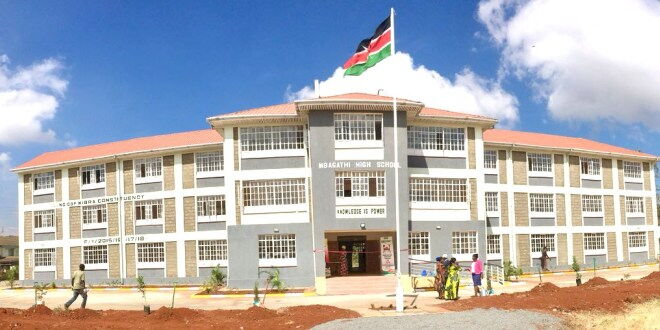
Even in the middle of the huge waste of CDF in Kenya, you go to Kibra constituency in Nairobi and you find the best use of CDF. It is like you are looking at different country compared to many schools in Kenya even in Nairobi.
Here is Mbagathi High School built with CDF money by Imran and his late brother Ken Okoth, the Kibra M.P before he took over and you are puzzled to realize that he gets the same amount of money as the other M.Ps and actually has a bigger population to serve in Kibra which is very densely populated.
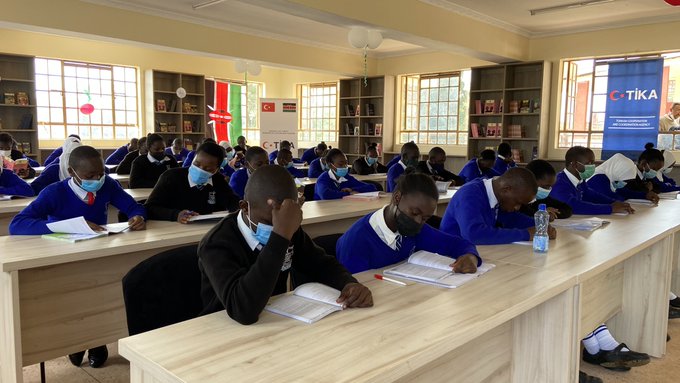

Those are some of the schools he built in Kibra and there are many others under construction.
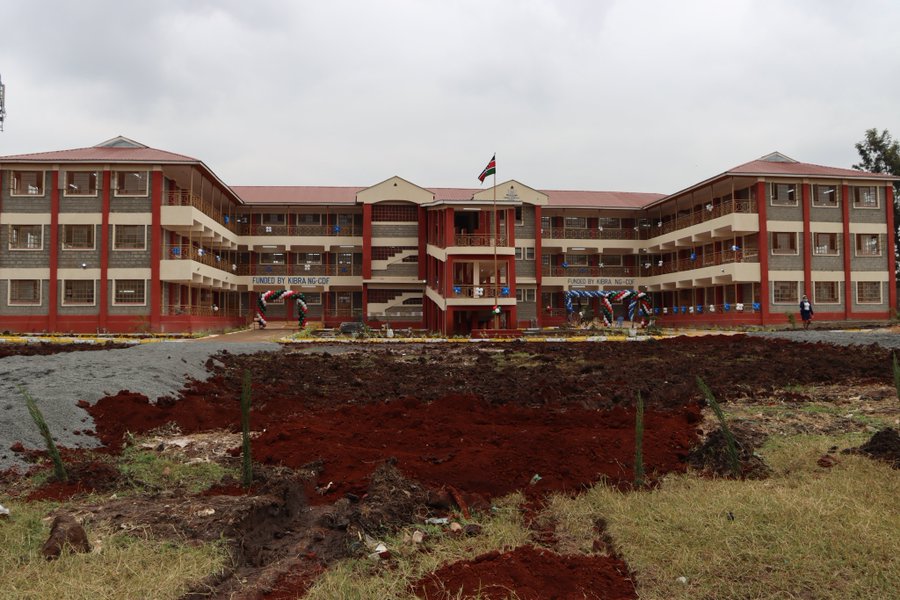
And inside the schools that Imran, Kibra M.P., built in his constituency, he has put the investments to make those places conducive to learning.
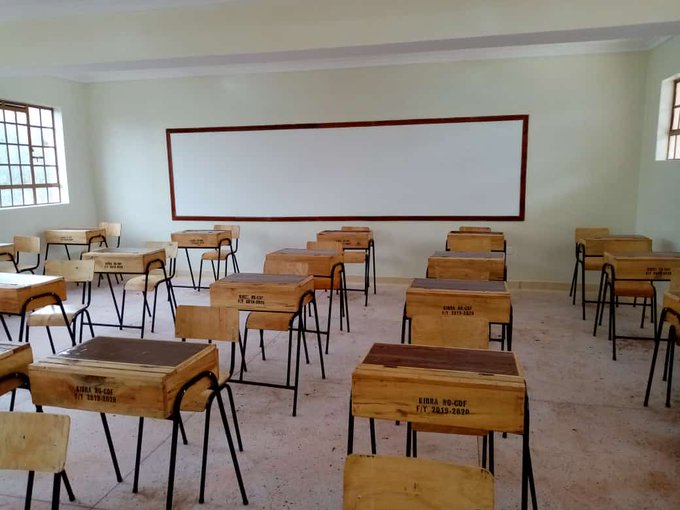
This M.P was building schools with the interests of the kids at the centre of his plans. Others paint walls to help the cover up for their theft of CDF.
Here is what it is in Kibra schools building laboratories for students to help them do better in their studies.
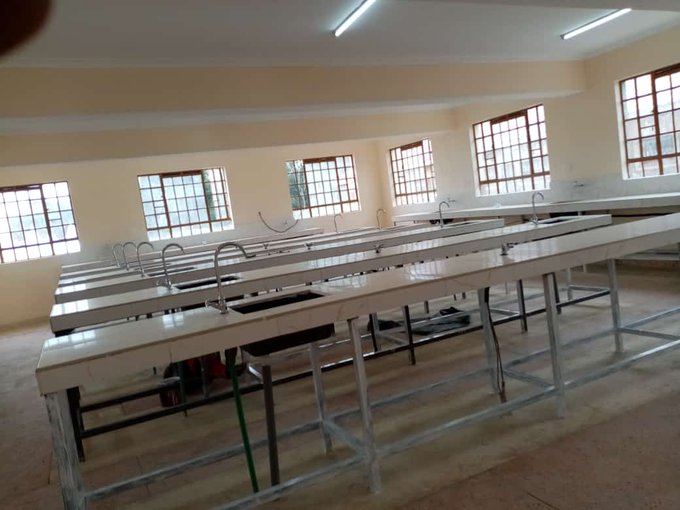
Strangely enough, after that great work with CDF money, which made him probably the best MP in the whole county, ODM did not nominate Imran Okoth to defend his seat in 2022, and he ran as an independent and lost to the ODM-nominated candidate Peter Orero, who is the current Kibra MP.
It would be interesting to know what Peter Orero has done with CDF money in Kibra for his constituents in the last four years as their MP. Any new projects? Have the Imran Okoth school projects been kept up, and have the ones that needed to be completed been done?
Adongo Ogony is a Human Rights Activist and a Writer who lives in Toronto, Canada