

Culture critics Sonjah Stanley Niaah and Danae Peart remember the iconic musician
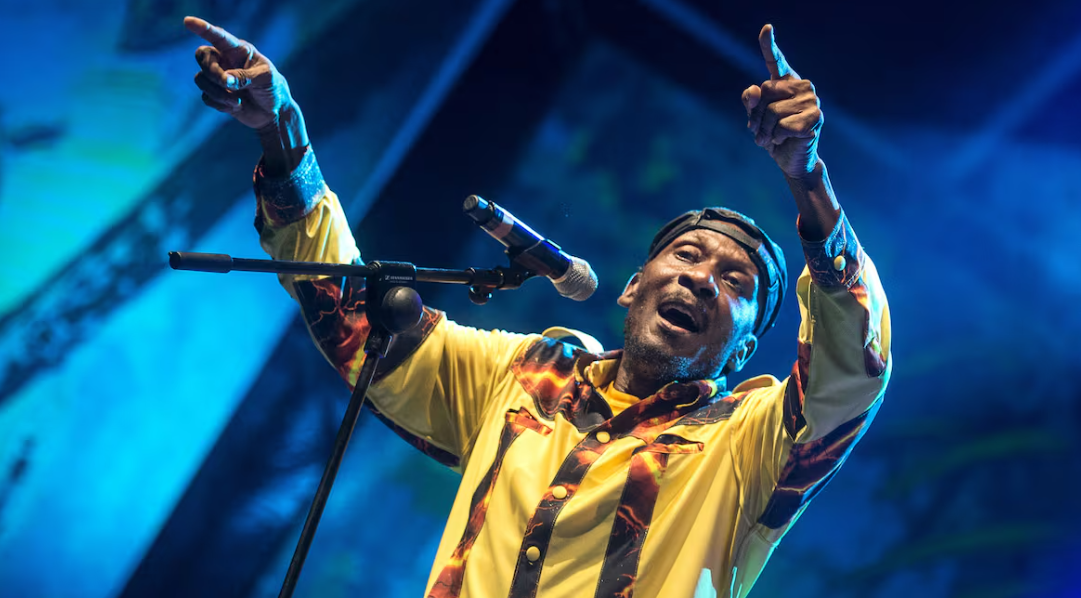
Jimmy Cliff died this past Monday at age 81. The Jamaican musician’s passing is a huge loss for the reggae community, as he helped bring the genre to the world.
Cliff is famous for his song Many Rivers to Cross, as well as his starring role in the first-ever Jamaican feature film, The Harder They Come.
Today on Commotion, host Elamin Abdelmahmoud looks back on Cliff’s legacy with University of the West Indies professor Sonjah Stanley Niaah and culture critic Danae Peart.
Elamin: Danae, what role did Jimmy play in your musical education?
Danae: He was a soundtrack to my life. So there are core memories being unlocked as I think about Jimmy Cliff. Growing up in Jamaica in primary school, Bongo Man was a dance recital song for most of the dance groups in my primary school. Then as I aged, appreciating the inspiration, the connection that his words, his lyrics meant to me, bringing me through some hard times. I’m talking about Many Rivers to Cross, I’m talking about all those kinds of emotions that come when you listen to a Jimmy Cliff song. But also the fact that he was the soundtrack for many people’s lives. He was a global icon. And I’m grieving and hoping that we can situate him well in the storytelling of reggae music of Jamaican culture.
Elamin: One of the things that Jimmy Cliff is credited with doing is bringing reggae to the world, bringing Jamaica to the world with it, at the same time. But it’s not a thing that just happened easily. There’s something about this process that even Many Rivers to Cross is a nod to the hardship that Jimmy Cliff faced as he was trying to bring reggae music to the U.K. Sonjah, I want to ask you, what would you say was his breakthrough moment back then in terms of actually succeeding to do this?
Sonjah: Many persons know that Jimmy Cliff had a career. Certainly he was performing from the age of six in the church and so on. But by the time we got to the 1970s — 1972 — we saw his breakthrough with the film The Harder They Come. That’s when Jimmy Cliff — and certainly reggae music — got into the global landscape. I remember stories being told about the Carib Theatre, how the premiere was almost canceled because the crowd, an overwhelming crowd — doors were destroyed and so on. And all over the nation, it caught on fire. Jamaicans seeing themselves on screen, hearing the music, of course, Jimmy Cliff with particularly his recordings, some of which were only recorded for the film. Certainly a major moment for Jimmy Cliff and his career, playing in the U.K., all over the globe. And of course, the film had subtitles, so it was accessible. Jimmy’s breakthrough — international breakthrough — really came with the film The Harder They Come.
Elamin: As reggae fans across the world sort of sit with Jimmy Cliff’s legacy, what’s the thing that you’d like for them to consider about that legacy?
Danae: What I want us to do is remember that he was a trailblazer, pioneer, first out-the-gate, first Jamaican superstar — not just in acting, but also in music. The first to take reggae music globally, the first to understand and explain and declare reggae as the genre of music that it should be respected as. And Jimmy Cliff, I literally tell you, you cannot tell the story of reggae without him. Because his life arc is reggae’s timeline.
You can listen to the full discussion from today’s show on CBC Listen or on our podcast, Commotion with Elamin Abdelmahmoud, available wherever you get your podcasts.