

The Kenya National Commission on Human Rights (KNCHR) has underscored that the planned reparations for victims of protest-related violence are meant to acknowledge wrongdoing and deliver justice, rather than serve as mere financial compensation.
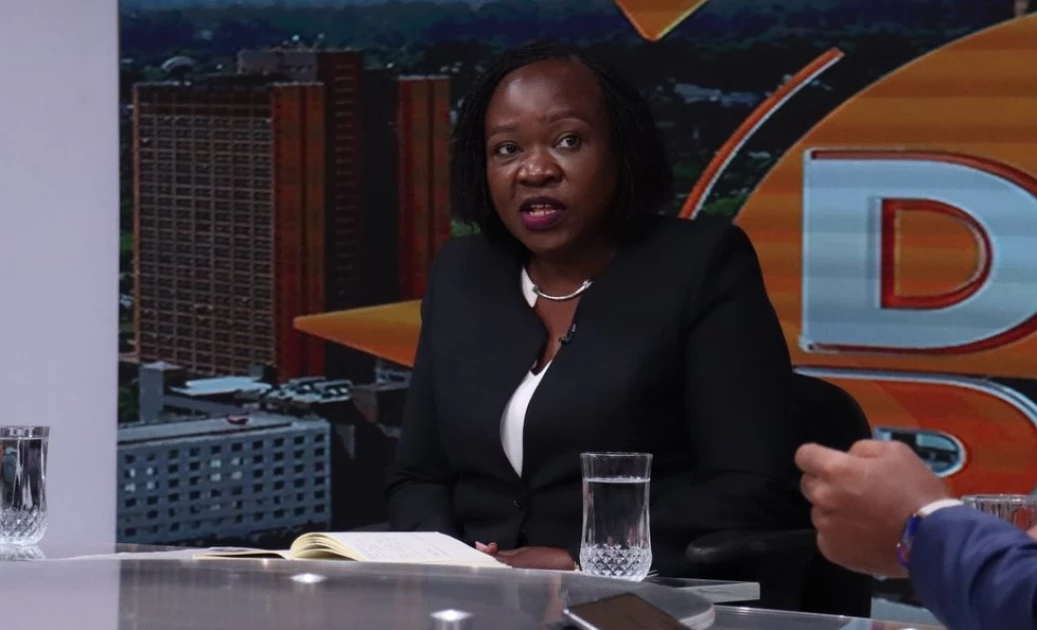
Speaking during a joint media briefing with the Committee Overseeing the Implementation of the 10-Point Agenda, KNCHR Chairperson Claris Ogangah emphasized that reparations should be understood in a broad sense, encompassing various measures beyond monetary payments.
“There are various facets of reparations that we need to be implemented in Kenya. We have restitution where if someone suffered loss of livelihoods, you can be restituted for your source of livelihoods. We have even public apology as a means of reparations,” Ogangah said.
She urged the public to view the proposed reparation process as a step toward accountability and recognition of harm suffered by victims and their families.
“We are hoping that the public will not just look at this as a compensation as paying people for dying. It is not paying people for dying. It’s acknowledging that there was a wrong that happened and it’s a way of saying sorry to the people who suffered losses,” she clarified.
Ogangah revealed that the state-funded rights agency has been documenting cases of individuals who were injured, killed, or otherwise affected during protests in recent years. The Commission is currently verifying information submitted by victims and their families.
“At the end of this process, we will submit a list of people who we have verified their information and we will also submit a guide on how compensation should take place,” she said. “The report will also have a proposed range of amounts to be paid to each victim based on the injuries they sustained or based on whether they died during the protest.”
The KNCHR has appealed to victims and survivors of past protests to submit evidence during the ongoing 21-day window in order to qualify for compensation. The Commission expects to finalize the list of victims and survivors by the first week of April, with compensation scheduled for disbursement by June 2026.
The reparations programme has been allocated a budget of Ksh2 billion. The initiative follows a directive by President William Ruto for KNCHR to develop a compensation framework within 60 days starting March 2026.