
IEBC says pre-2012 voters must register afresh or miss out on 2027 poll
As of right now, the Independent Electoral and Boundaries Commission (IEBC) has directed Kenyans who registered as voters before 2012 to register afresh, saying they are not captured in the current biometric Register of Voters (RoV).
The biggest question Kenyans are asking is how those voters successfully voted in 2022 when the Biometric System was already in place and there were no problems for them in casting their votes.
“Should those who registered before 2012 as voters need to register afresh? Not at all UNLESS they DID NOT register as voters from 2012 when the new Register of Voter (RoV) was established under the Constitution of Kenya 2010 and boundaries delimitation of 2012,” is the latest statement of clarification from IEBC.
Whatever the case, there are two dangerous possibilities here that Kenyans need to be addressed by the IEBC very quickly.
One is that there are plans to completely mess up the coming elections in 2027 because if we are lucky 50% of those old voters who voted in 2022 will register again to vote. It could be less but the end of it all will mean Kenya will have the lowest number of votes ever cast in any election in 2027. That is too much for the country to put up with.
The other possibility is that if the current IEBC is right, then the entire 2022 election was a complete fraud where the IEBC at that time decided to pretend that they were checking the biometric data for each person before they voted and just faked that they passed the test. That would mean the whole government in power today from the national to the counties are illegally in office and the entire 2022 election was a terrible fraud on Kenyans.
Now the question that may define the future of our country is which of those two complete ruins of our country are we dealing with and can the IEBC come forward and talk to Kenyans about this instead if issuing orders from their offices.
Martha Karua has raised an important aspect on the new IEBC developments referring to what she calls administrative failures at the IEBC.
On her part, Karua has explained that IEBC’s administrative failures have turned into a burden for Kenyans.
“Your right to vote is not conditional. It is guaranteed under Article 38 of our Constitution. Kenyans cannot be punished for administrative failures within the IEBC,” Karua stated.

The question on the line whether Kenya had fake elections in 2022 because the IEBC was compromised enough to just give voters a free pass and ignore the constitutional requirements for voting after 2012 and just let voting happen in 2022.
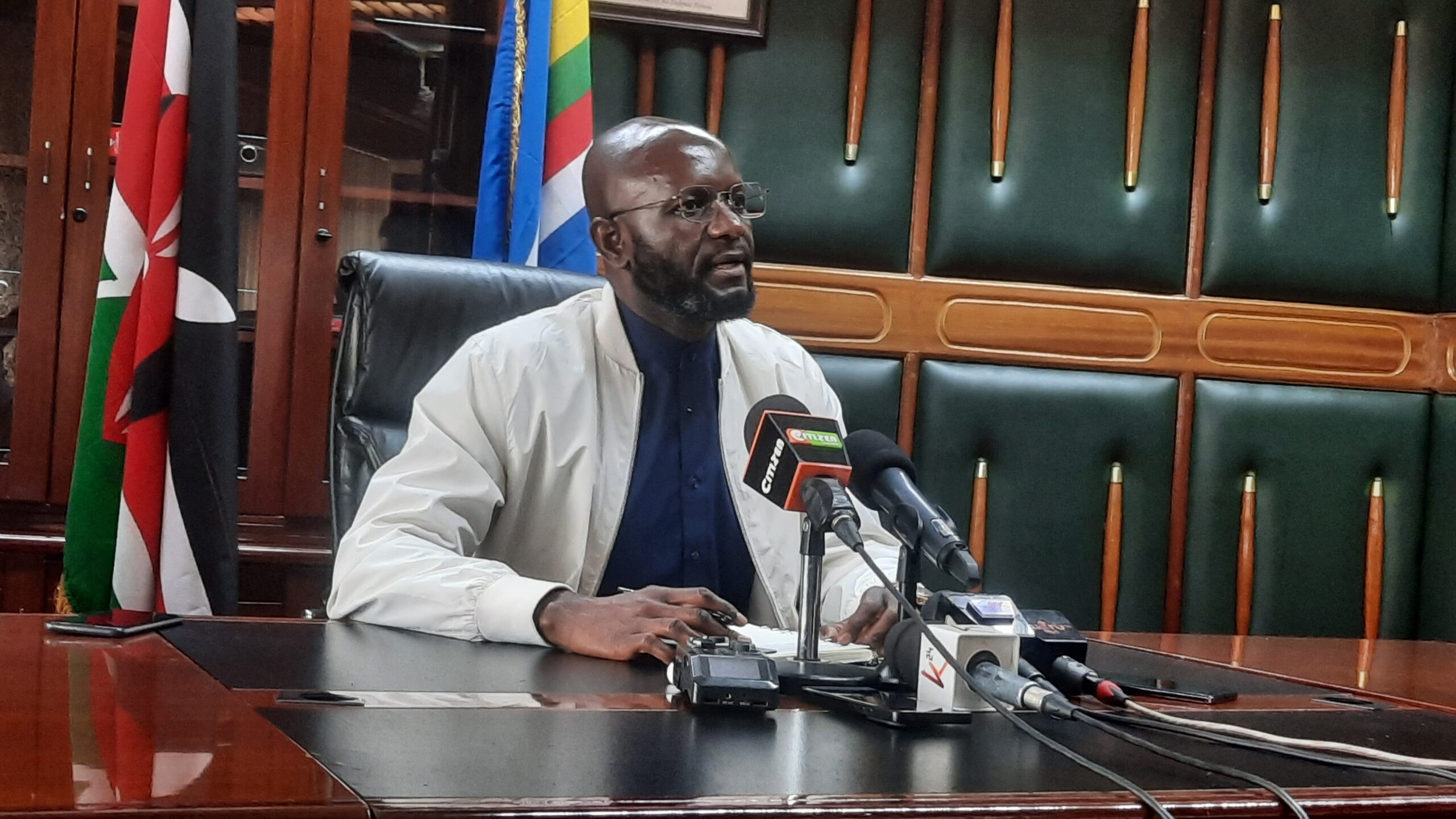
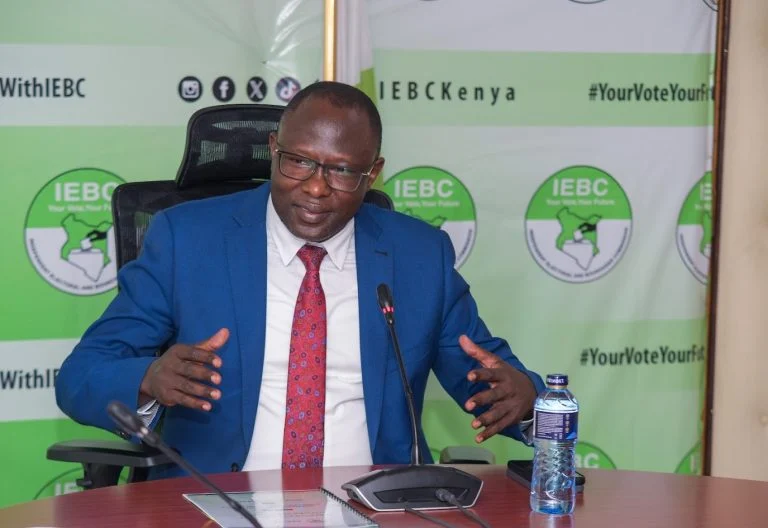
In a detailed status update on the ongoing Enhanced Continuous Voter Registration (ECVR) issued on Friday, IEBC Chairperson Erastus Edung Ethekon said the current register was established following the 2012 electoral reforms that introduced biometric voter registration.
“Should those who registered before 2012 as voters need to register afresh? Not at all UNLESS they DID NOT register as voters from 2012 when the new Register of Voter (RoV) was established under the Constitution of Kenya 2010 and boundaries delimitation of 2012,” is the statement of clarification from IEBC
“Consequently, individuals who had previously enrolled as voters before 2012 are not part of the current biometric RoV unless they subsequently presented themselves for fresh registration,” said Ethekon.
“Such persons are, therefore, required to register afresh in order to be included in the current biometric register.”
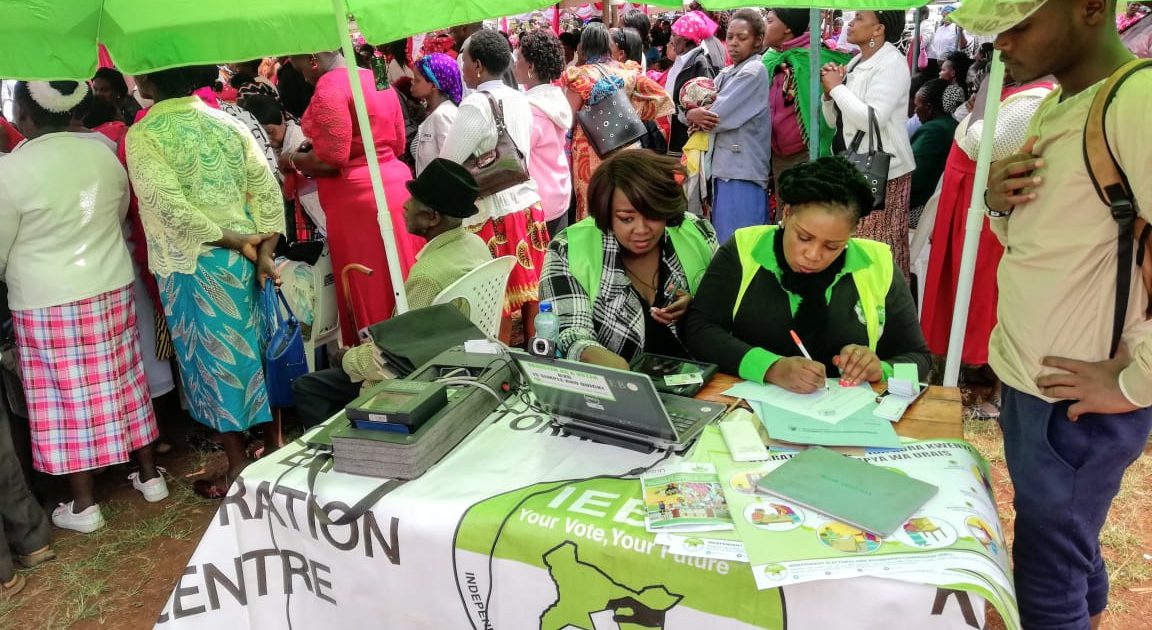
The clarification comes as the commission ramps up a nationwide mass voter registration drive ahead of the 2027 General Election.
The exercise, which began on March 30, will run for 30 days until April 28 across all 1,450 County Assembly Wards, Huduma Centres, institutions of higher learning, and constituency offices. IEBC is targeting to enlist at least 2.5 million new voters during the period.
Ethekon described the exercise as a critical democratic milestone, noting that broad participation is key to shaping the country’s future.
“This nationwide mass registration drive is a critical milestone as we prepare for the 2027 General Elections,” he said, adding that the commission’s mission is to ensure inclusive participation in the electoral process.
To ease access, the IEBC said Kenyans can register from any location nationwide without necessarily travelling to their home counties, thanks to the deployment of open kits that allow voters to select their preferred polling stations.
The commission also outlined strict requirements for voter transfers, stating that individuals must present themselves physically at their intended constituency offices and submit their biometric data afresh.
Vote counting in Kenya after elections are the most annoying spectacles we see in our country when the IEBC members sit down and politicians in power are having endless lists of votes they force to be included so they can win. Is that the same nightmare Kenyans are going to face after 2027 elections.

IEBC Chairperson Ethekon is right in putting down some basic principles on the ground towards 2027 elections but there are bigger issues on the voter registration process that must be sorted out now.
“This process ensures proper verification and confirmation that the transfer request has been made by the voter and nobody else,” Ethekon said.
“It also helps eliminate cases of unlawful mass voter transfers not authorized by the voters.”
IEBC has urged eligible Kenyans, particularly youth and first-time voters, to take advantage of the remaining days, noting that the exercise will not be extended beyond the April 28 deadline.
“Our primary mission during this window is simple — ‘kuwakatia KADI’,” Ethekon said, referring to the issuance of voter registration acknowledgement slips.
“Participation in voter registration is a fundamental civic responsibility and a cornerstone of democratic governance.”
He added that the voter’s card represents more than proof of registration, but a citizen’s commitment to shaping leadership and holding leaders accountable.
At the same time, IEBC noted that registration is currently suspended in areas with ongoing by-elections or election petitions. These include Porro and Endo wards, as well as Emurua Dikirr, Ol Kalou, Malava and Mbeere North constituencies.
The commission has called on Kenyans to register early and avoid last-minute rush, urging citizens to mobilise friends, families, and communities to participate in the exercise.
“Together, let us strengthen our democracy through active, informed, and inclusive participation,” Ethekon said.
Finally, this thing of windows for voter registration which is 30 days here and there is just nonsense. It is gross abuse of the right of every Kenyan to register to vote for their leaders and has to be stopped.
Let the IEBC open voter registration centres from now till June 2027, two months to the election day of August 8, 2027.
Why do the voting centres have to be closed when Kenyans are going there to register?
In real life and in many democratic countries there is no such thing as voter registration because every citizen has a right to vote and all they need is their citizenship ID and they vote wherever they want in their country.
We know it is too much to ask for that in our country but for the love of God can we have a fair and reasonable voter registration system to give all Kenyans the opportunity to register as voters and pick the leaders who run their country at all levels. What is wrong with that?
IEBC is asking for billions of Kenyans tax money to run the elections. Kenyans need to ask them how they are spending that money to ensure that all Kenyans have voting cards and will be ready to vote in 2027.
IEBC Reveals Ksh61 Billion Needed for 2027 General Election
The Independent Electoral and Boundaries Commission (IEBC) revealed that Ksh61 billion will be needed to finance the upcoming 2027 General Elections.
Appearing before a National Assembly Committee, IEBC Deputy Chief Executive Officer (CEO) Obadiah Keitany confirmed the figure adding that the commission would register an additional 5.7 million Kenyans as voters. This would bring the total figure of registered voters to 28 million.
“The commission projects an additional 5.7 million new voters to have a total of 28 million in the 2027 election,” Keitany remarked.
The money would be used for a variety of activities ranging from boundary delimitation, kit replacement, allowances, ballot paper transport, and other miscellaneous costs.
For boundary delimitation, Keitany informed the committee that the Commission’s budget was Ksh7 billion but this was still a matter that needed advisory from the courts.
IEBC Finance Director Osman Ibrahim stated that 45,352 Kenya Integrated Election Management System (KIEMS) kits, which IEBC needs to electronically capture voters’ facial images, fingerprints, and civil data would need replacing.
“There will be a total replacement of 45,352 KIEMS kits, except for the 14,000 bought in 2022. In total, 59,352 kits are required,” said IEBC Finance Director Osman Ibrahim.
Ibrahim explained that KIEMS kits become obsolete after 10 years and that the total cost of replacing them is Ksh7 billion, going by the Ksh65,000 cost of each.
The latest figure released by IEBC supersedes the amount used in the previous 2022 elections, which were the most expensive in the world. The elections involved 22,120,258 voters to the tune of Ksh44.6 billion.
And where are the voting centres. They are out there in a few places in Nairobi and our urban centres. My first job in life was a voter registrar in Barkowino sub location in Sakwa. I went there as a secondary school kid so happy to have a job.
We were given tables and materials to work even under trees and submit our record of people registered to vote on each day of our work.
My father who always wanted me to get a job even when I was too young for that and had me working on the family onion farm which was strange in our community was so happy that I finally got a job a voter register in Barkowino. He didn’t even bother to ask me how much I was going to be paid because he knew it would be peanuts, but he just wanted me to know how to actually have a job and work.
Kenyans have to tell the IEBC in the name of country to have that money out and do voter registration fulltime to make Kenyans vote for the government they want. That is the job of our IEBC.