
The IEBC says a university degree is not currently a requirement for aspirants seeking to contest the presidency, governorship or parliamentary seats in the 2027 General Election.
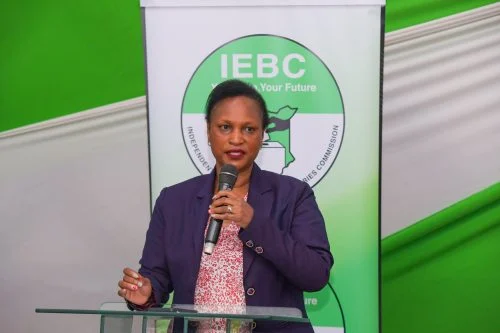
IEBC Commissioner Ann Nderitu said the commission is bound by a court decision that found Section 22B(1) of the Elections Act unconstitutional, effectively knocking out the degree threshold that had triggered fierce debate after the 2022 polls.
“As we start now, there is no requirement for a degree for anybody. That’s the situation we are in,” Nderitu said on Citizen TV on Sunday night.
Nderitu said the challenge to the law had been mounted before the 2022 election, with petitioners questioning whether degrees could be demanded for presidential, parliamentary and gubernatorial candidates.
The court, she explained, only made its final determination after that election.
According to the commissioner, the judge anchored the ruling on Articles 27 and 10 of the Constitution. Article 27 guarantees equality and freedom from discrimination, while Article 10 sets out the national values and principles of governance, including public participation.
She said the court also weighed Kenya’s education profile and cited the 2019 Census, which placed the proportion of Kenyans holding university degrees at 3.5 per cent.
On that basis, Nderitu said, the court reasoned that enforcing a degree requirement would amount to shutting out the remaining 96.5 per cent of Kenyans from vying for top offices.
“According to the ruling then, it means that the rest of the Kenyan 96.5 per cent cannot participate in elections for governor, for president and for member of parliament. Meaning then, that is discriminatory,” she said.
Nderitu added that the court also faulted the manner in which the degree rule had been introduced, saying the process did not meet the constitutional bar on public participation under Article 10.
She said the requirement could only be restored through proper legislative action and public consultation.
“Unless now, maybe somebody will go to court, or we then start the process of public participation and now allow the degree process now to come through the proper public participation, and what Kenyans will return, the verdict Kenyans will return upon public participation, then we go by that,” Nderitu added.
The commissioner, however, said the ruling did not abolish the Constitution’s broader expectation that Parliament should provide education qualifications for elective offices.
In her reading, the Elections Act had been the vehicle used to operationalise that requirement, a vehicle now parked by the court.
“The Constitution expected that there shall be registration by Parliament interpreting Article 99 that requires that there shall be education qualification, then put it into force that this is the qualification that will be required for every seat,” she said.
For now, Nderitu said, a degree is not part of the requirement for president, governor or MP.
“But degree, as we start now, is not part of the requirement,” she noted.
She also addressed the educational qualification for Members of County Assembly, where a post-secondary certificate had previously been required.
Nderitu said the MCA issue was not directly before the court, but noted that the ruling raises fresh questions over whether Kenya can maintain different academic bars for governors, MPs and ward representatives.