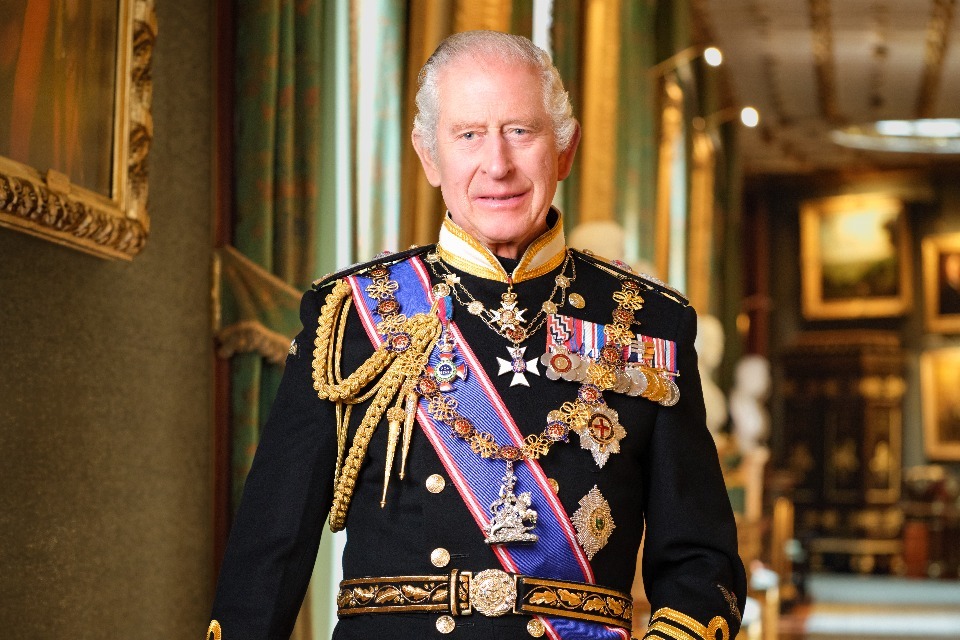

In the news now, King Charles III is to speak with “unflinching honesty” and “sincere sorrow” on the lasting pain of the transatlantic slave trade, during the final leg of his Caribbean tour in Antigua, Buckingham Palace has said.
The King will address Commonwealth leaders on Tuesday in a speech which will touch on the issue.
Prime Minister Andy Burnham said earlier he was “open” to the possibility of the UK formally apologizing for its role in slavery – a change in the government’s stance.
It is understood the Palace was told in advance of Burnham’s comments in an opinion piece on Friday night, and the King has not made any changes to his speech in light of them.
The British government has never formally apologized for slavery or offered to pay reparations.
The King will be giving the opening speech at CHOGM, which gathers leaders from those 56 states every two years in a different part of the Commonwealth.
The United Nations General Assembly has now recognised the enslavement of Africans during the transatlantic slave trade as the gravest crime against humanity. The resolution, proposed by Ghana, received 123 votes in favour, with only three countries voting against it: the United States, Israel and Argentina. Fifty-two countries, including Britain and European Union member states, abstained.
The resolution is not legally binding. But its political and moral significance is difficult to dismiss.
Between the 15th and 19th centuries, European powers constructed an international system of human trafficking on an extraordinary scale. Portugal, Spain, Britain, France, the Netherlands, Denmark and other European states participated in a commercial enterprise that treated African human beings as commodities.
Historical estimates indicate that more than 12 million Africans were forcibly transported across the Atlantic. Nearly two million died during the Middle Passage alone. Countless others perished during capture, forced marches to the coast, imprisonment in slave forts and the brutal conditions aboard trading vessels.
These were not isolated acts of cruelty. They were part of an organised economic system sustained by merchants, bankers, insurers, colonial governments, plantation owners and political institutions.
The wealth generated from this system helped finance European commercial expansion and the development of economies in the Americas. Sugar, tobacco and other plantation commodities generated enormous fortunes, while African families, communities and societies paid an almost unimaginable price.
The consequences for Africa were devastating.
Entire communities were uprooted. Families were permanently separated. Societies were destabilised by violence, kidnapping and the growing demand for human beings. European powers accumulated wealth and influence while African societies endured the consequences of a trade they did not design but were forced to endure.
It is important to acknowledge that some African rulers and merchants participated in the trafficking of captives and benefited from the trade. That historical reality should not be concealed. But it does not erase the responsibility of the European powers that financed, expanded, institutionalised and profited enormously from the transatlantic system.
Nor should the history end with the formal abolition of slavery.
The racial hierarchies, economic inequalities and institutional structures created during slavery did not disappear when the trade ended. Their consequences continue to influence contemporary debates about race, wealth, development and historical justice.
This is why the reparations debate cannot simply be dismissed as an attempt by modern Africans to demand money from contemporary Europeans.
Ghana and other advocates have argued that reparatory justice must include more than financial compensation. It should encompass educational opportunities, institutional investment, skills development, the restoration of cultural heritage and the return of African artefacts stolen during the colonial era.
These are legitimate questions that deserve serious international engagement.
The argument that present-day institutions cannot be held responsible for historical wrongdoing also deserves scrutiny. Many of those institutions, commercial fortunes and national economic structures were built during periods when slavery and colonial exploitation generated extraordinary wealth.
History cannot be selectively remembered when its benefits are being celebrated and selectively forgotten when its victims demand accountability.
King Charles’s anticipated remarks therefore come at an important moment. Expressions of sorrow may be meaningful, but they cannot substitute for an honest examination of the historical record and the continuing consequences of slavery.
Africa must also approach this moment with historical confidence. The continent must document its past, preserve its heritage, strengthen its institutions and articulate a coherent position on reparatory justice.
The transatlantic slave trade was not simply an African tragedy. It was a global crime whose economic benefits were distributed across continents while its human costs were disproportionately borne by Africans and their descendants.
The question confronting the international community is no longer whether this history happened. The evidence is overwhelming.
The question is whether the world is prepared to confront what happened, acknowledge who benefited, recognise who suffered and engage honestly with the consequences.
History does not disappear because powerful nations would prefer to move on. And justice cannot begin where historical truth is deliberately avoided.
Adongo Ogony is a Human Rights Activist and a Writer who lives in Toronto, Canada