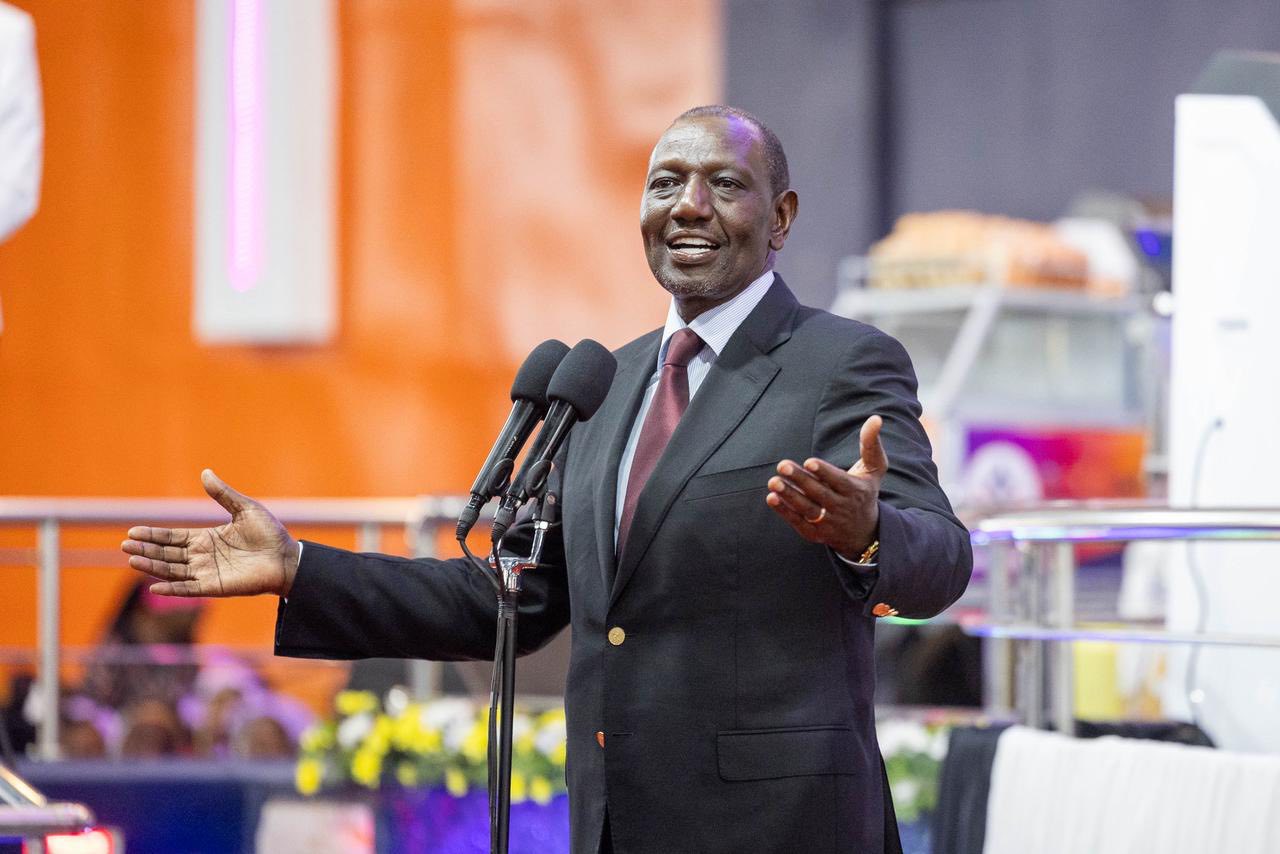


President William Ruto has directed the Kenya National Commission on Human Rights (KNCHR) to develop a formal plan outlining how victims of human rights violations, including those who suffered during demonstrations and public protests, will receive compensation.
In a notice published in the Kenya Gazette on March 6, President Ruto’s Panel of Experts will oversee the implementation of the framework once KNCHR has developed it in 60 days.
“It is notified for the general information of the public, that His Excellency the President has established a Panel of Experts pursuant to Presidential Proclamation No. 1 of 2026,” read part of the notice.
The statement added that President Ruto shall not exercise supervisory authority over the work of the Kenya National Commission on Human Rights.
Instead, the government will support the implementation of the framework, consistent with the Executive’s commitment to justice and accountability, and ensure that compensation to eligible victims is effected in a transparent, accountable and timely manner, in accordance with the framework developed by the Kenya National Commission on Human Rights and the Constitution of Kenya,” the gazette notice read.
This is one of the most important decisions by President Ruto to get the country out of the endless rat hole where the government agreed to have a compensation plan for victims of state violence then a bunch of busy bodies with the human rights groups and opposition politicians blocked everything with endless court cases and did not give a damn about those victims because it doesn’t affect them personally and they do not care about those victims.
It is important to note that the compensation deal for victims of state violence going back to 2017 right now was a key part of the co-operation agreement between Raila Amolo Odinga and his ODM with President Ruto and his UDA team in government.
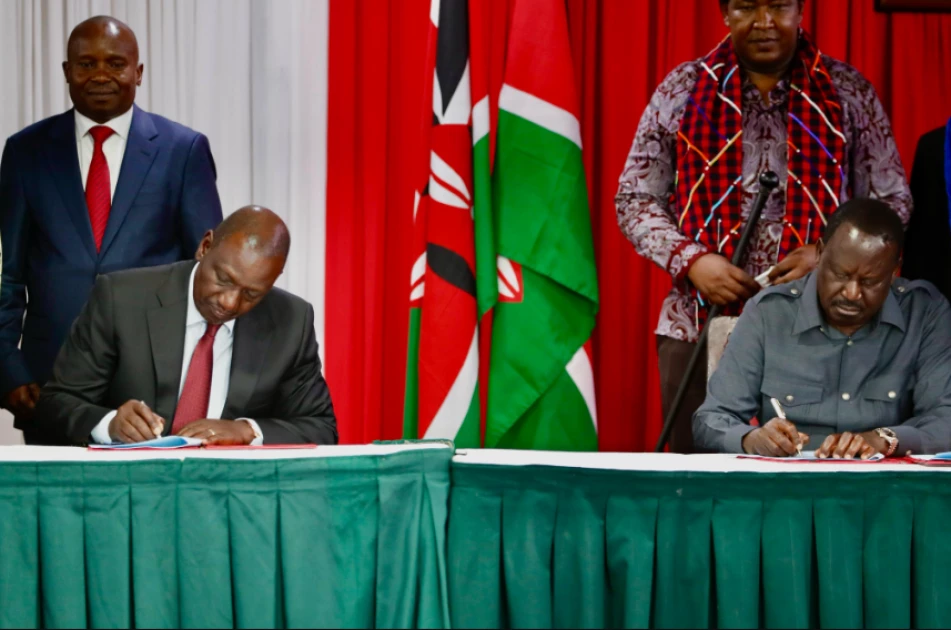
It was very good that ODM new leadership instead of getting in the petty fights put their focus on getting the compensation deal worked out and now the results of that effort are very good for the victims. Incidentally the negotiated deal between President William Ruto and Raila Odinga was signed exactly two years ago on March 7, 2024. Bringing part of what was agreed to life now is a crucial part of that journey between ODM and President Ruto’s team.
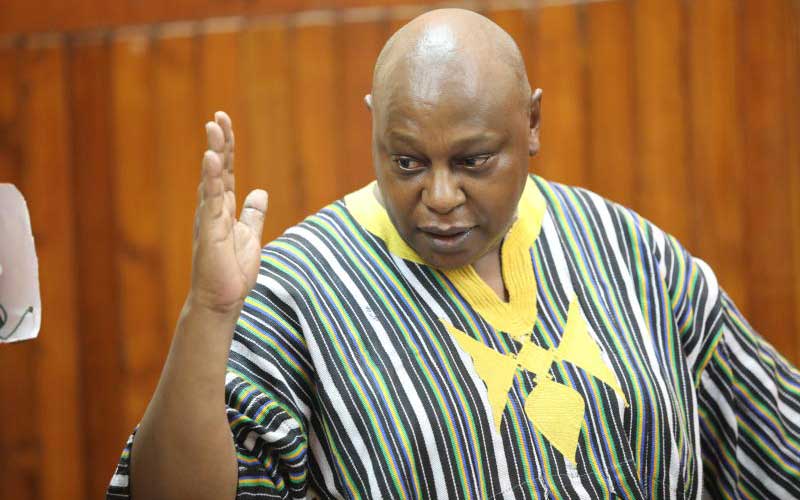
The big challenge is how that system will work. President Ruto has his team under the leadership of Prof. Makau Mutua which will operate from his office and that is fine. It is the KNCHR which has the gigantic job of getting all those victims and family members into a structure where all information and data needed in relation to the state abuses will be collected so that every person presents their cases for compensation.
It is a very tough job that Kenyans did once before and it was also under the auspices of KNCHR during its first term in office under Maina Kiai and the groundwork was done by organizations like People Against Torture (PAT) with Njuguna Mutahi as the ground soldier.
Here is the document that came out of that whole process in 1995.
It is not often that survivors of torture have the courage, the foresight and the wherewithal to
record their painful experiences in writing in Kenya.
In a context where there is no culture of
reading more than daily newspapers (due to constraints including poverty, illiteracy and lack of
state encouragement), writing something as painful and personal as what is contained in this
book is more than welcome.
I have worked directly for many years in human rights. Yet, each time I listen to, or read, the
testimonies of survivors, I never fail to get a surge of emotion. The same questions spring to my
mind.
For example, what internal mechanisms are needed to survive and tell such horrors? Can
one ever prepare oneself adequately for these horrors? What entity spares some and not others
even in terms of the degree of horrors? What do the perpetrators think as they commit these
horrors? How do they insulate their minds from their horrible work? Answers to some of these
questions—at least from the survivors’ perspective—are alluded to in this book.
When we as human rights activists worked to help produce the “We Lived To Tell” publication we were lucky that there was already a group called Citizens For Justice which was focused on bringing activists and ex-prisoners together, so we were able to meet and plan things.
The centre of our work was at PAT office in Nairobi where we met every day and everybody had their work cut out to collect information and compile all the data together.
In our case the information we were collecting was not for compensation because Moi was still in power, but it was for us to continue our war against human rights abuses in Kenya and actually it was after we were able to put everything together that many of us were able to sue the Kenya government for torture and human rights abuses.
Some of us are still in court today because the government has refused to pay us after we won our cases in the courts. That is one thing we are going to take up with President Ruto.
If he is really serious about compensation for victims of state violence, he should ask his Internal Ministry to stop blocking payments to victims who have won their cases and some have been waiting for more than 10 years to get paid and many are dying before they get that compensation.
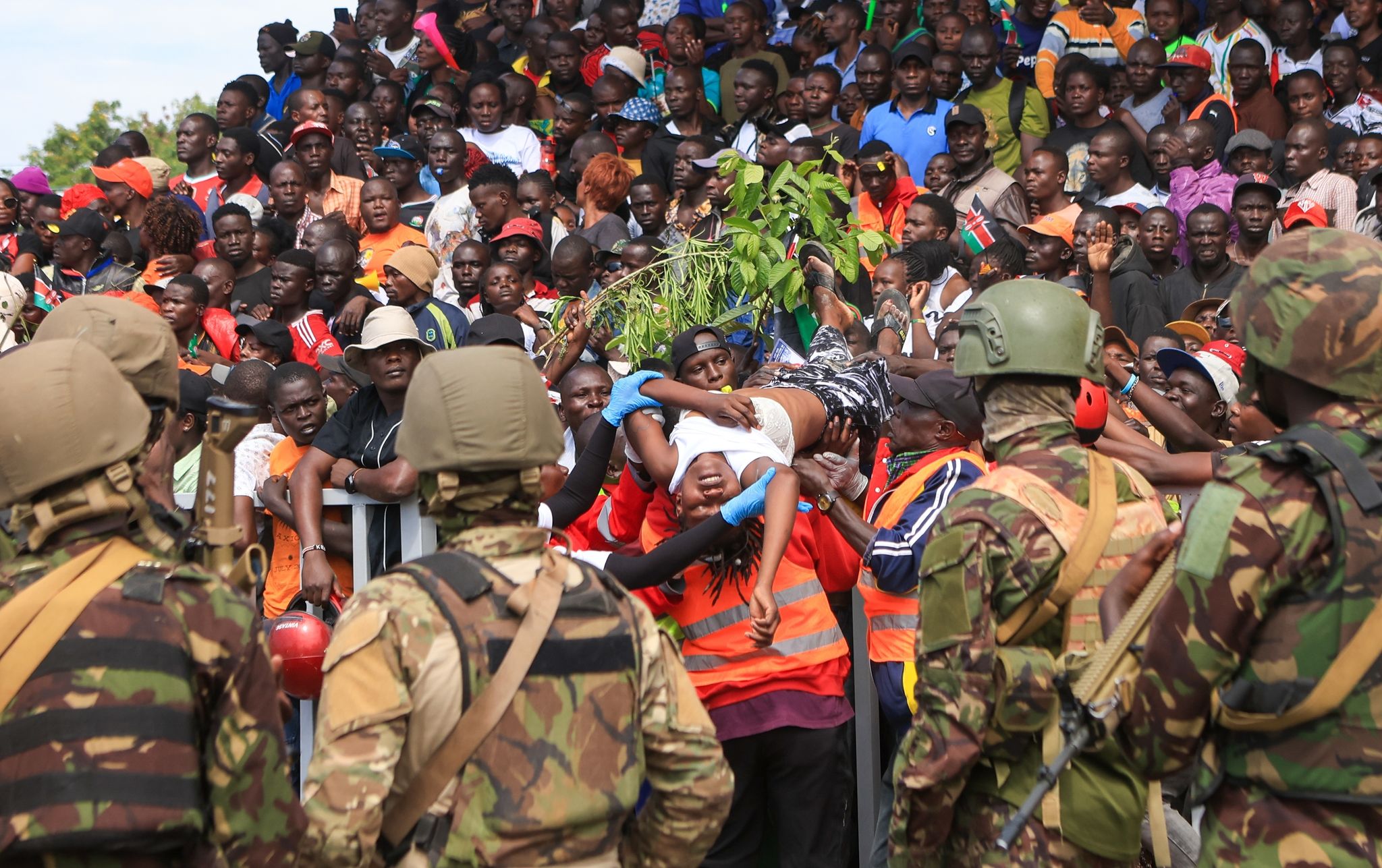
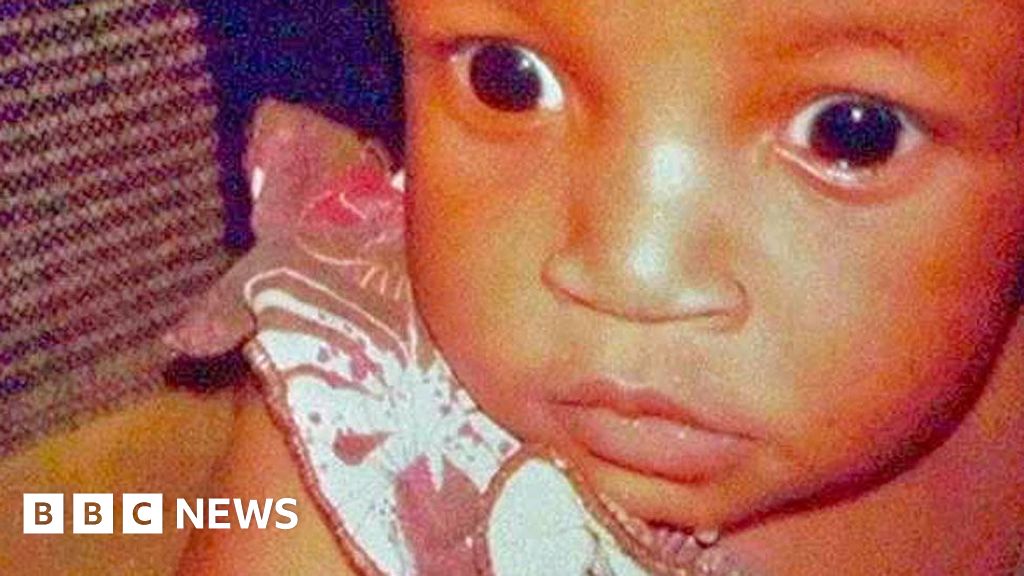
Kenya’s baby Samantha Pendo killing, police brutality and the long wait for justice
Seven years after their baby daughter was killed during a brutal midnight operation by police in Kenya at a time of post-election tension, Joseph Oloo Abanja and Lensa Achieng are still raw with emotion as the case against the alleged officers involved has once again been delayed.
“It is a scar that will never fade away,” Ms Achieng, a hotel worker, tells the BBC about the death of six-month-old Samantha Pendo who died with a broken skull and of internal bleeding.

After each postponement or small development, the couple are swamped with calls. Each moment of expectation leads to disappointment in their search for justice.
The family live in the western city of Kisumu – an opposition stronghold where riots broke out in August 2017 amid anger about the results of an election that was eventually re-run because of irregularities.
Their small home was along a road in the Nyalenda informal settlement that witnessed protests on 11 August where anti-riot police were deployed.
That night the couple locked their wooden door and barricaded it with furniture. At around midnight, they heard their neighbours’ doors being broken down and some of the occupants being beaten.
It was not long before police officers arrived at their door.
“They knocked and kicked it several times [but] I refused to open,” Mr Abanja tells the BBC, adding that he pleaded with them to spare his family of four.
But the battering continued until the officers found a small space through which they threw a tear-gas canister into the one-roomed house, forcing the family out.
Mr Abanja says he was ordered to lie down outside the door and then the beating started.
“They were going for my head so I held my hands up, and they beat my hands until they could not hold any more.”
His wife came out of the house holding Samantha, who was having difficulty breathing because of the tear gas, and was not spared either.
“They went ahead beating me [with clubs] while I was holding my daughter,” Ms Achieng says.
The next thing she felt was her daughter holding her tight “as if she was in pain”.
“I turned her and what was coming outside her mouth? It was foam.”
She shouted that they had killed her daughter and it was at that moment the beatings stopped and Mr Abanja was ordered to administer first aid.
The couple say officers then swiftly left and neighbours helped them rush Samantha to hospital. She died after three days in intensive care.
Their quest for justice has been long and frustrating, like that of dozens of others caught up in the post-poll violence.
Twelve police officers have been expected to be charged with murder, rape and torture – but the hearing at which this will happen, when they will be asked to enter a plea, has yet to happen.
One of the victims’ lawyers, Willys Otieno, reckons that the delay is due to a lack of political will to deliver justice to victims of election violence.
Here is a very sad part of the Samantha Pendo tragedy. The crazy killer who ordered the murder of that little kid and so many other Kenyans in 2017, Fred Matiang’i then Uhuru Kenyatta’s gun man is actually one of the big hopes for the united opposition in Kenya today. Uhuru Kenyatta wants to bring his killer back to run the Kenya government.
That is another story, but the focus now has to be on how the KNCHR can get all the support and assistance they need to bring the compensation package together by enabling all victims and family members to have meaningful participation and moving the process forward.
In cases like that of Samantha Pendo and her family KNCHR should talk to the family and the government to have an agreeable deal because it is just endless punishment for that family and it has to stop now. The Kenyan government has to accept responsibility for killing that kid and the horror they have taken the family through in the last 9 years. Enough is enough. There are many others like that in the courts now.
Then we go to collecting all records of state terrorism in Kenya for the last 8 years and it is a huge and very important job. We are ready as are those suffering victims of state violence in our country and what they need is a structure set up by KNCHR in the whole country and they only have 60 days so that has to start right on Monday March 9, 2026.
One thing that should be dealt with right away if for President Ruto to provide the resources that KNCHR needs to undertake this very important job they have been given. They can’t handle that on their budget because they have to build a whole infrastructure to get this done. The compensation itself is another issue where the money will be paid to the victims and family members directly by the government, but getting the job done is a lot of work and that needs its own budget to help KNHCR accomplish that task.
So just do it quick and get things going and focus on the end game which is compensation for victims of state violence and get it done.
I raised these concerns with my human rights comrades in Jamhuri sometimes back.
Has The Kenyan Victims Compensation Plan Died a Natural Death? – Home | Hivi Punde
It seems we are getting where we need to be and that is just a great thing for the victims of state violence and the country.