

In ancient Rome, the circus was more than entertainment; it was a political instrument, a social pacifier, and a mirror of empire.
The Circus Maximus, capable of holding over 150,000 spectators, was the beating heart of Roman leisure. Chariot races, gladiatorial contests, and theatrical spectacles offered citizens a thrilling escape from the hardships of daily life. Yet beneath the spectacle lay a deeper purpose: distraction. The emperors understood that as long as the masses were entertained, they would remain docile. “Bread and circuses” became the formula for social stability.
Two millennia later, the arenas have changed, but the essence remains.
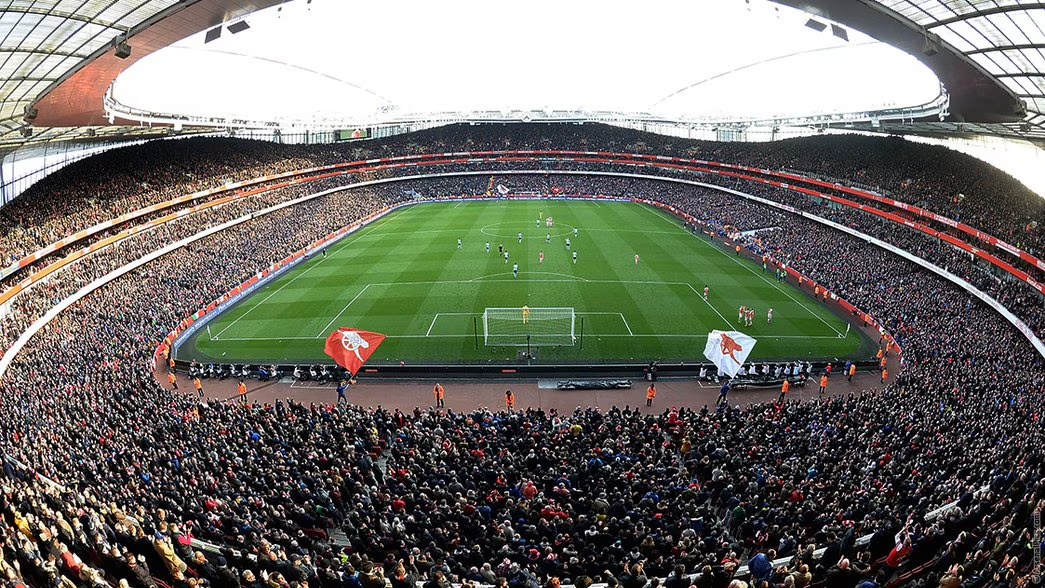
Today’s professional sports, whether football, basketball, or Formula 1, serve as the modern equivalent of the Roman circus. Stadiums have replaced amphitheaters, athletes have replaced gladiators, and global media networks have become the new emperors, orchestrating the spectacle for billions.
The parallels are striking. In both eras, sport functions as a unifying ritual, a shared language that transcends class, race, and geography.
Just as Roman citizens cheered for their favorite chariot teams, the Reds, Blues, Greens, and Whites, modern fans pledge allegiance to clubs and franchises with near-religious devotion. The chants, colors, and rivalries echo the tribal fervor of ancient Rome.
Economically, the comparison is equally revealing.
The Roman elite funded games to curry favor with the populace; today, corporations and billionaires invest in teams to secure influence, prestige, and profit. The spectacle is monetized at every level, from broadcast rights to sponsorships, merchandise, and betting, turning passion into a trillion-dollar industry. The modern athlete, like the gladiator, is both idolized and exploited, celebrated for physical prowess yet bound by the demands of spectacle and commerce.
Politically, sports continue to serve as a tool of distraction and soft power.
Governments invest heavily in hosting mega-events like the Olympics or the World Cup, not merely for sport but for image, nationalism, and control of narrative. During times of crisis, sporting triumphs are used to rally morale and divert attention from deeper societal fractures. The roar of the crowd drowns out dissent, just as it did in the Roman forum.
Yet, there is a crucial difference.
Unlike the Roman circus, today’s sports are not solely instruments of manipulation. They also embody aspiration, discipline, and global connection. Athletes inspire millions, and sports can unite nations in moments of shared humanity. The same spectacle that distracts can also uplift.
Still, the historical echo is unmistakable. The modern stadium, illuminated by floodlights and broadcast across continents, is the digital-age Circus Maximus.
The masses gather, physically or virtually, not for bread, but for belonging. The emperors have been replaced by media conglomerates, the gladiators by athletes, and the arena by the global screen.
In the end, professional sports reveal as much about society as the Roman circus did about its empire. Both are reflections of power, passion, and the human need for spectacle.
The question is not whether the games will continue, they will, but whether the audience will remain content with the show, or begin to look beyond the arena for meaning.