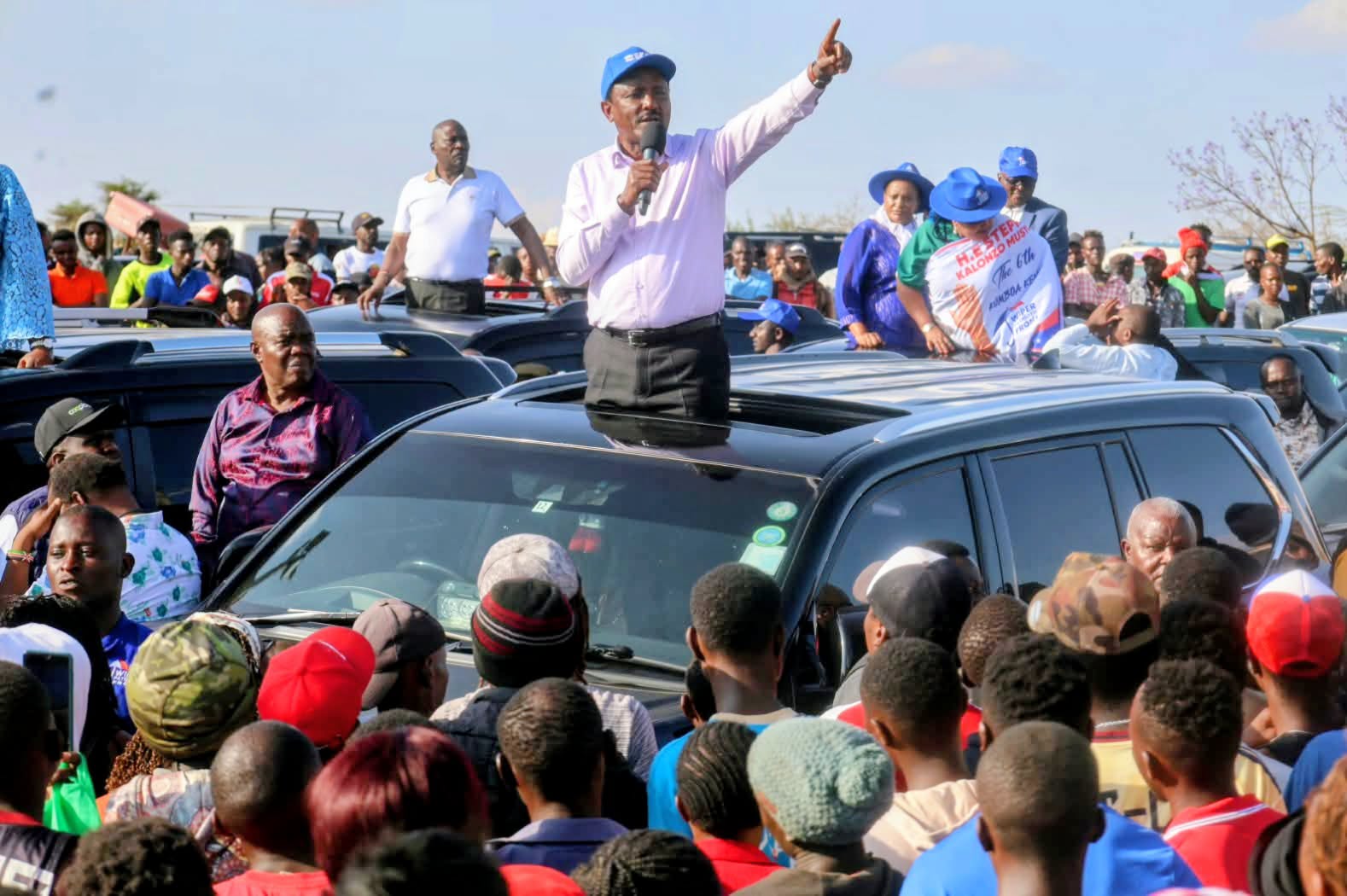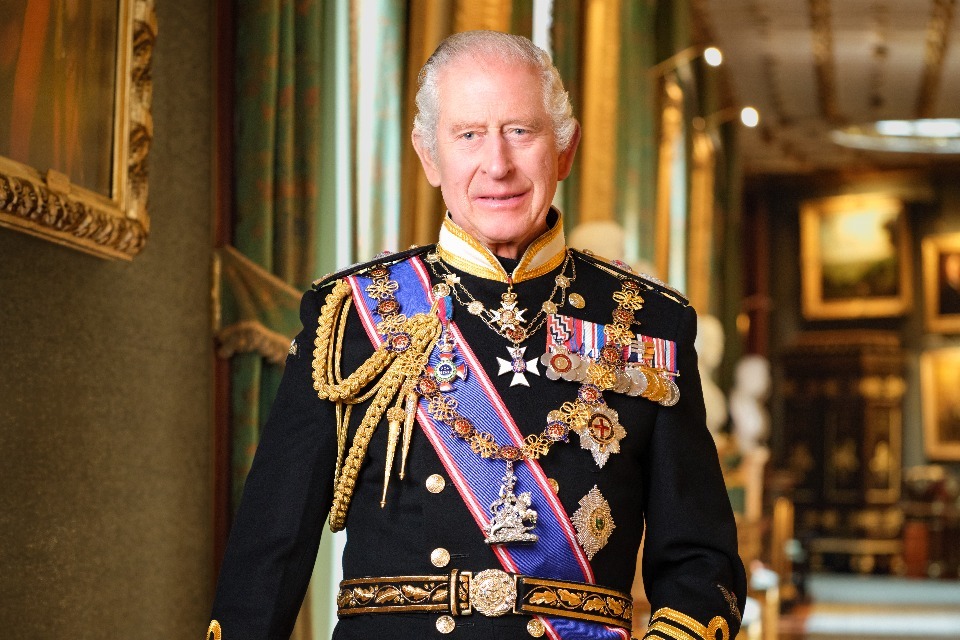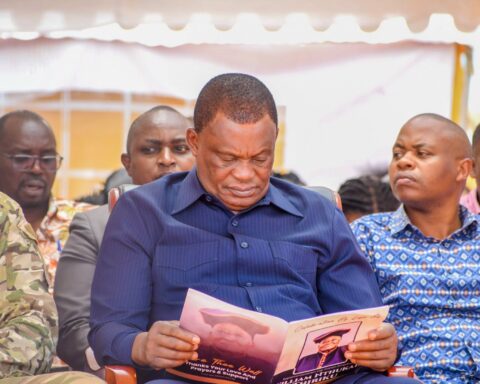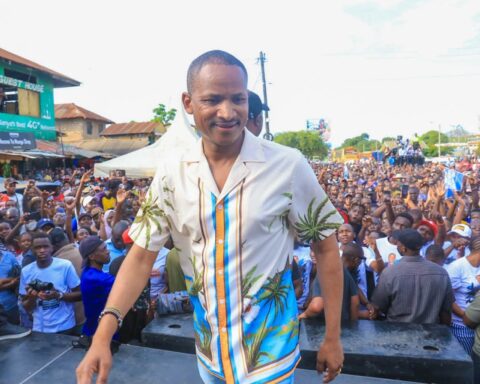

What was supposed to be a formidable political alliance against President William Ruto is increasingly becoming a theatre of personal ambition, political entitlement and competing egos. At the centre of this unfolding crisis are former Deputy President Rigathi Gachagua and Nairobi Senator Edwin Sifuna, two politicians whose growing influence appears to have come with an equally dangerous inability to accommodate others.
There is a fundamental difference between building a political movement and assembling a crowd of enthusiastic supporters. The former requires patience, discipline, negotiation and a willingness to subordinate personal ambition to a greater cause. The latter requires little more than a microphone, a popular slogan and enough political excitement to dominate social media for a few days.
Kenya’s United Opposition is discovering this distinction the hard way.
For months, opposition leaders have assured Kenyans that their differences would be resolved through consultations and that they would eventually present a single presidential candidate against President William Ruto in 2027.
Yet the closer the country moves towards the election, the more apparent it becomes that some of the politicians championing unity are themselves its greatest obstacles.
Rigathi Gachagua has approached coalition politics as though he holds the title deed to the Mt Kenya electorate. Edwin Sifuna, meanwhile, risks confusing the excitement surrounding his Linda Mwananchi movement with a national political consensus.
Both appear increasingly comfortable demanding accommodation from others while showing remarkably little willingness to extend the same courtesy.
And the first major casualty of this political arrogance may well be Wiper leader Kalonzo Musyoka.
The Humiliation of Kalonzo Musyoka
The reported heckling of Kalonzo Musyoka during the launch of the Linda Mwananchi party headquarters in Nairobi was more than an unfortunate incident at a political gathering. It exposed the contradictions at the heart of an opposition that publicly preaches unity while privately entertaining competing presidential ambitions.
According to accounts of the event, sections of the crowd insisted that Edwin Sifuna be recognised not merely as a party leader but as a presidential candidate.
Kalonzo reportedly left the function visibly displeased.
Kalonzo is not an ordinary political guest whose presence can be casually dismissed. He is a former Vice President, a longstanding opposition figure and a politician who has repeatedly sacrificed his own presidential ambitions in the name of coalition arrangements.
He supported Raila Odinga in successive presidential contests, often at considerable political cost to himself.
Whether one admires Kalonzo’s politics or considers his leadership overly cautious, his place in Kenya’s opposition history cannot reasonably be disputed.
For his supporters, therefore, the heckling was not simply an insult to an individual. It raised a broader question about whether the emerging Linda Mwananchi leadership respects the political partners whose support it may need in 2027.
Kalonzo’s subsequent declaration that he intends to appear on the presidential ballot complicates matters considerably.
It is possible that he would have made that declaration regardless of the heckling. His presidential ambitions are longstanding. Nevertheless, the incident has provided fresh ammunition to those within Wiper who believe their leader has spent too many years accommodating politicians who do not reciprocate his sacrifices.
The larger problem for Sifuna is that a politician cannot simultaneously demand the loyalty of established opposition leaders and allow a political culture in which those same leaders are treated as obstacles to his personal advancement.
A presidential campaign requires allies. A cheering crowd is not a substitute for them.
Gachagua’s Imaginary Ownership of Mt Kenya
If Sifuna’s challenge is the danger of mistaking political excitement for national endorsement, Gachagua’s problem is the increasingly extravagant assumption that Mt Kenya’s millions of voters constitute a private political estate.
Gachagua has built much of his post-impeachment political identity around the argument that he commands a decisive voting bloc capable of determining the outcome of the 2027 presidential election.
But there is an important distinction between enjoying considerable political influence in a region and possessing the authority to negotiate away its votes.
Eight million votes, frequently invoked in discussions about Mt Kenya’s electoral strength, are not shares in a private company. They belong to individual Kenyan citizens exercising their constitutional rights.
No politician can legitimately guarantee that every voter in a region will vote according to his instructions.
This is where Gachagua’s approach to coalition negotiations becomes deeply problematic.
If political negotiations are reduced to demands for financial consideration or disproportionate positions in exchange for supposedly guaranteed regional votes, the opposition risks becoming little more than a marketplace for political patronage.
Claims that Gachagua has demanded billions of shillings in exchange for electoral support require documentary evidence before they can be treated as established fact. But even without proving such allegations, the underlying political question remains: should any opposition leader be allowed to convert regional influence into an unquestionable veto over the presidential ambitions of everybody else?
The answer must be no.
Mt Kenya is not politically homogeneous. It contains different generations, economic interests, political loyalties and competing visions of national leadership.
Uhuru Kenyatta once enjoyed enormous political influence in the region. That did not prevent significant sections of its electorate from rejecting his preferred presidential succession in 2022.
Gachagua himself benefited from that political rebellion.
It would therefore be a remarkable historical irony if he now assumed that the same electorate had surrendered its independent political judgment to him.
Muturi’s Warning and the Crisis of Political Bullying
Democratic Party leader Justin Muturi’s criticism of Gachagua raises another uncomfortable question about the internal character of the United Opposition.
Muturi has accused the former Deputy President of political bullying, double-speak and undermining the collective ambitions of the opposition.
These are serious allegations, particularly coming from a politician who has occupied some of the highest offices in the Republic.
The central issue is not whether Muturi and Gachagua personally agree. Political alliances routinely accommodate individuals with different personalities and ambitions.
The question is whether Gachagua understands that an opposition coalition is a partnership among political equals rather than an extension of his personal political machinery.
A coalition cannot survive where one leader assumes the authority to determine who is politically relevant, who should be admitted into negotiations and who must abandon presidential ambitions.
Such arrangements inevitably breed resentment.
The Wantam movement originally derived much of its political energy from a shared determination to challenge Ruto’s administration.
But a shared opponent is not the same thing as a shared political programme.
Unless the opposition develops an agreed framework for leadership selection, power sharing, constitutional reforms and economic policy, its unity will remain vulnerable to every new disagreement among its principals.
Gachagua’s political influence may be considerable, but influence without restraint can become a liability.
The opposition cannot credibly accuse Ruto of concentrating political power while tolerating similar tendencies within its own ranks.
Sifuna’s Popularity and the Danger of Political Celebrity
Edwin Sifuna’s political rise presents a different but equally important challenge.
The Nairobi senator has established himself as an articulate critic of the Ruto administration. His confrontational political style, command of public debate and considerable visibility across digital platforms have helped transform him into one of the most recognisable younger politicians in the country.
But political popularity can become a dangerous intoxicant.
There is a temptation among politicians enjoying favourable media attention to mistake public excitement for political inevitability.
Social media applause begins to resemble a national mandate. Online supporters become mistaken for an organised electoral majority. Political criticism is dismissed as jealousy, while legitimate questions about experience, alliances and electoral strategy are treated as personal attacks.
That is the danger confronting Sifuna.
The Linda Mwananchi movement has created considerable political excitement, but excitement alone cannot answer the difficult questions of national leadership.
What is its economic programme? How does it intend to confront unemployment, public debt, corruption and the deteriorating purchasing power of ordinary households? What concrete constitutional and institutional reforms distinguish it from the political formations it seeks to replace?
More importantly, how does Sifuna intend to assemble a winning national coalition while maintaining working relationships with leaders such as Kalonzo, Fred Matiang’i and Babu Owino, whose ambitions and political constituencies cannot simply be wished away?
The incident at the Linda Mwananchi headquarters offered a revealing glimpse into these challenges.
There is, however, an important distinction between the behaviour of Sifuna’s supporters and Sifuna’s own conduct. Contemporary reports confirm that he intervened to stop the heckling and asked the crowd to respect Kalonzo. It would therefore be inaccurate to suggest that he publicly encouraged the disruption. The Star+1
Nevertheless, political leadership is judged not only by what a leader says when disorder erupts, but also by the political culture that develops around him.
Sifuna must decide whether he wants to lead a broad national movement or preside over an increasingly intolerant political fan club.
The two are not the same thing.
Matiang’i Exposes the Contradiction in Gachagua’s Opposition Strategy
Fred Matiang’i’s warning against excluding other political players goes to the heart of the opposition’s growing dysfunction.
According to the remarks attributed to Gachagua, the former Deputy President believes that he, Kalonzo and Sifuna constitute a sufficiently formidable political alliance to form the next government, with other opposition figures welcome to join.
It is a politically convenient argument, but one that exposes a profound misunderstanding of coalition-building.
An opposition coalition cannot claim to represent a national alternative while treating other significant political actors as dispensable passengers.
Matiang’i, Martha Karua, Justin Muturi, Eugene Wamalwa, Ndindi Nyoro and other opposition figures represent different political interests, constituencies and networks.
Their individual electoral strengths may be disputed. Their political relevance cannot simply be cancelled by a declaration from Gachagua.
Indeed, the assumption that three politicians can determine the country’s political future without meaningful consultation with others resembles precisely the exclusionary political culture the opposition claims to oppose.
Matiang’i’s argument is particularly important because it shifts the discussion from personalities to political architecture.
A united opposition must be built around agreed principles, transparent negotiations and mutual respect.
It cannot be assembled through political ultimatums issued from private residences or public rallies.
And if Gachagua believes that his political influence entitles him to decide who belongs at the negotiating table, he should remember that the same argument could be used by other politicians to exclude him.
The Great Opposition Deception: Wantam Without a Common Agenda
Perhaps the most troubling aspect of the unfolding opposition crisis is the growing distance between its political rhetoric and its actual conduct.
The Wantam slogan has been effective in mobilising dissatisfaction with the Ruto administration.
But removing an incumbent president is a political objective, not a governing philosophy.
What exactly unites these politicians beyond their opposition to Ruto?
Do they share a common economic programme? Do they agree on the relationship between the presidency and independent institutions? Have they developed a credible plan for addressing Kenya’s debt burden, unemployment, taxation and the cost of living?
And, most fundamentally, have they agreed on a democratic method of selecting their presidential candidate?
The answer to the last question appears increasingly uncertain.
The opposition has become a gathering of presidential ambitions held together by a common enemy.
Gachagua wants to be recognised as the indispensable kingmaker. Sifuna’s supporters want their leader elevated to the presidency. Kalonzo believes his years of political sacrifice and established national networks deserve serious consideration. Matiang’i insists that other political actors cannot be excluded from the coalition.
Each position reflects a different understanding of what opposition unity is supposed to mean.
Unless those differences are reconciled, the movement risks repeating a familiar tragedy in Kenyan politics: leaders who spend years condemning the incumbent only to discover that their greatest disagreement concerns who should replace him.
Ruto May Be the Biggest Beneficiary
President William Ruto does not need to defeat a united opposition if the opposition defeats itself before the election.
Every public disagreement among its leaders creates an opportunity for the ruling establishment.
Every incident of heckling weakens trust. Every attempt to exclude a potential partner encourages rival political formations. Every exaggerated claim about regional voting strength complicates negotiations over the presidential ticket.
The arithmetic of presidential elections is unforgiving.
Under Kenya’s Constitution, a successful presidential candidate must secure more than half of all votes cast and at least 25 per cent of the votes in more than half of the counties.
That constitutional requirement rewards broad geographical coalitions, not narrow political arrangements built around the personal ambitions of a few influential individuals.
Gachagua may command considerable support in Mt Kenya. Sifuna may excite younger voters and sections of the opposition electorate. Kalonzo may retain substantial political networks in Ukambani and beyond.
But none of those constituencies automatically translates into a winning national majority.
A divided opposition could allow Ruto to consolidate his support while his challengers spend their political energy fighting over positions they have not yet won.
The tragedy would be particularly profound because the opposition has an opportunity to build a serious alternative around constitutional governance, economic reform and institutional accountability.
Instead, the public conversation is increasingly dominated by personal rivalries, competing presidential declarations and disputes over political seniority.
The Opposition Must Choose Between Political Entitlement and National Leadership
The events surrounding the Linda Mwananchi headquarters launch should serve as a warning.
Kalonzo’s heckling was not merely an embarrassing interruption. It revealed how quickly coalition politics can deteriorate when supporters begin treating competing ambitions as acts of betrayal.
Muturi’s criticism of Gachagua points to another danger: the possibility that the opposition’s internal negotiations are being shaped more by political intimidation than genuine consultation.
Matiang’i’s warning about exclusion exposes a third problem: the tendency of some leaders to mistake temporary political alliances for permanent ownership of the opposition.
Taken together, these developments suggest that the United Opposition faces a crisis extending far beyond the question of who becomes its presidential candidate.
It is a crisis of political character.
The opposition must demonstrate that it can practise the democratic values it demands from the government.
That means respecting dissent, accommodating competing ambitions, rejecting political bullying and recognising that no individual owns a community’s votes.
It also means abandoning the illusion that political popularity is sufficient preparation for national leadership.
There is no credible evidence presented here to establish the separate claim that Gachagua is preparing to relocate to Texas within eleven months. Such a consequential allegation should not be published as fact without independent verification.
What can be said with greater confidence is that the opposition’s internal disagreements have become sufficiently serious to threaten its electoral prospects.
The greatest danger to the United Opposition may not be William Ruto’s political machinery. It may be the arrogance of politicians who believe they have already inherited a presidency that Kenyans have not yet given them.
And unless Gachagua, Sifuna and their fellow opposition principals confront that reality, 2027 could become another election in which an incumbent survives not because the country is satisfied with his government, but because those seeking to replace him could not agree on how to govern themselves.