
Former Deputy President Rigathi Gachagua is increasingly finding himself isolated within the opposition, as fellow presidential hopefuls pursue independent political strategies and resist his attempts to dominate the emerging anti-government coalition ahead of the 2027 General Election.
From Mt Kenya to the wider opposition, the DCP leader’s quest to establish himself as the central power broker is running into resistance from politicians with their own presidential ambitions and little appetite for being dictated to.
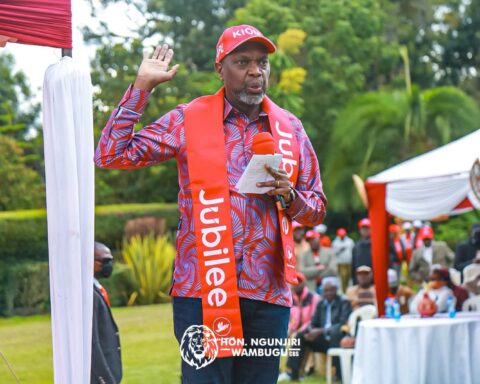
Jubilee Party presidential candidate Fred Matiang’i was among the first to chart a separate path, rejecting Gachagua’s insistence that the Democracy for the Citizens Party should be the political vehicle for the Mt Kenya region.
Instead, Matiang’i has moved to work with Peoples Party of Kenya leader and Kiharu MP Ndindi Nyoro in efforts to consolidate a Mt Kenya political base outside Gachagua’s influence.
His ties to former President Uhuru Kenyatta have also given him an independent political foundation, complicating Gachagua’s efforts to position himself as the region’s undisputed political kingpin.
Matiang’i’s approach has exposed the limits of Gachagua’s regional ambitions, with rival leaders signalling that Mt Kenya’s political future cannot be determined by one party or one individual.
People’s Liberation Party leader Martha Karua has also resisted Gachagua’s attempts to assert authority over the region’s politics. The presidential hopeful has previously taken a swipe at his leadership style, likening him to a noisy matatu tout who shouts without offering direction.
The latest signs of unease are emerging beyond Mt Kenya, where the opposition is struggling to settle questions of leadership and the eventual presidential ticket.
There are reports of growing suspicion within Nairobi Senator Edwin Sifuna’s camp following the recent Wamunyoro visit, amid concerns over Gachagua’s political intentions and the balance of power within the opposition.
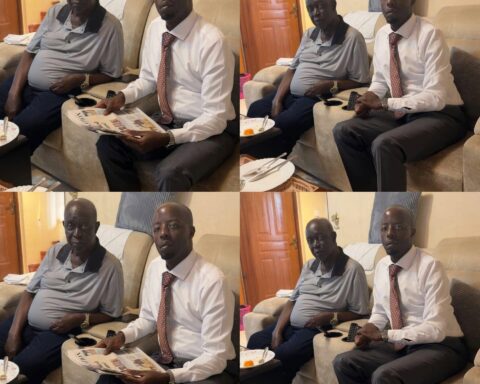
Wiper leader Kalonzo Musyoka has also emerged as a potential point of friction after meeting Gachagua at Wamunyoro this week. Reports that Gachagua wanted Kalonzo to deputise Sifuna have added to the tensions, with the Wiper leader maintaining his own presidential ambitions.
For Kalonzo, who has spent years seeking the presidency, the prospect of being pushed into a deputy position would represent a major political retreat. His insistence on pursuing the top seat underscores the difficulty of building an opposition alliance around a hierarchy that its leading figures have not agreed upon.
Taken together, these developments point to a growing problem for Gachagua: the very politicians he needs to unite against President William Ruto are increasingly determined to protect their own political space.
His influence remains significant, particularly in Mt Kenya, but the resistance from Matiang’i, Karua and Kalonzo suggests that his authority within the wider opposition is far from settled.
With the 2027 election approaching, Gachagua risks becoming a powerful political player with fewer willing partners — a leader capable of mobilising his own support base but struggling to persuade fellow presidential hopefuls to follow his lead.
The opposition’s challenge is to agree on a common candidate and a credible strategy. Gachagua’s challenge may be even more immediate: convincing his fellow contenders that unity does not mean submitting to his control.