
Kenya has never lacked development plans. From Sessional Paper No. 10 of 1965 to District Focus for Rural Development, from structural adjustment programmes to Economic Recovery Strategy, every administration has promised a roadmap to prosperity. Most disappeared with the governments that conceived them.
Vision 2030 was different. Launched in 2008 under President Mwai Kibaki, it was the first national blueprint that deliberately attempted to rise above the politics of the five-year election cycle. It asked Kenyans to imagine the country through the horizon of an entire generation, beyond who was President. For all its successes and shortcomings, that was its greatest achievement. It taught government to think beyond the next budget and challenged citizens to think beyond the next election.
Today, with barely four years left before that horizon is reached, President William Ruto has opened what may become the most consequential policy conversation in Kenya since the Constitution of 2010.
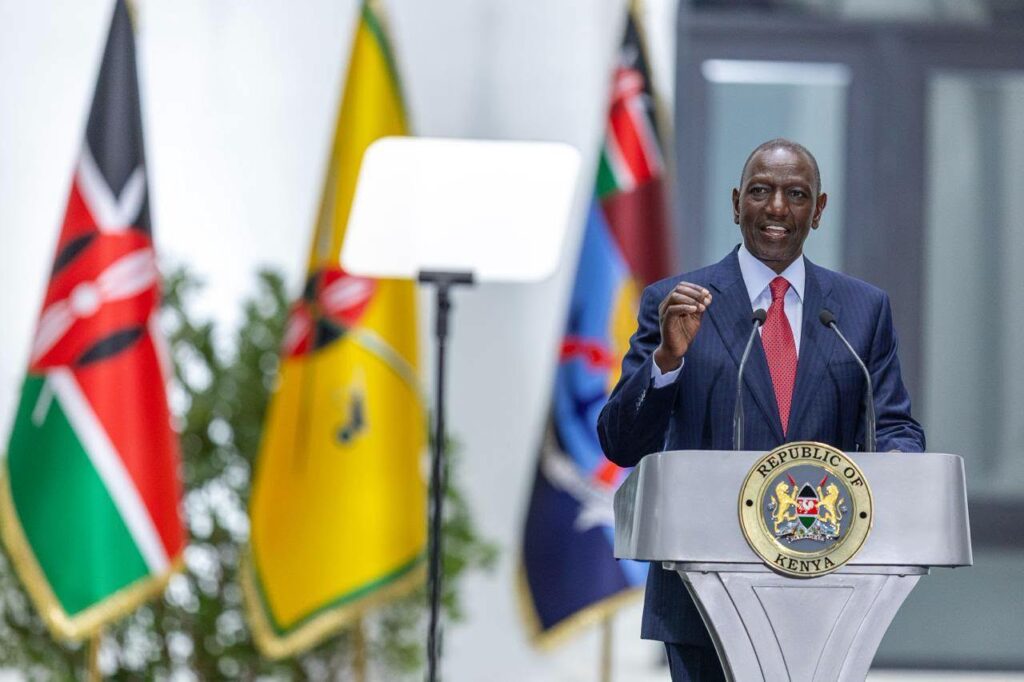
His announcement of a nationwide consultation to craft Kenya’s national development vision beyond 2030, if pursued seriously, is an attempt to answer a question that every successful nation eventually confronts. What comes after the dream that has shaped an entire generation? That is a question about our history as a country, and significantly, it did not begin with William Ruto.
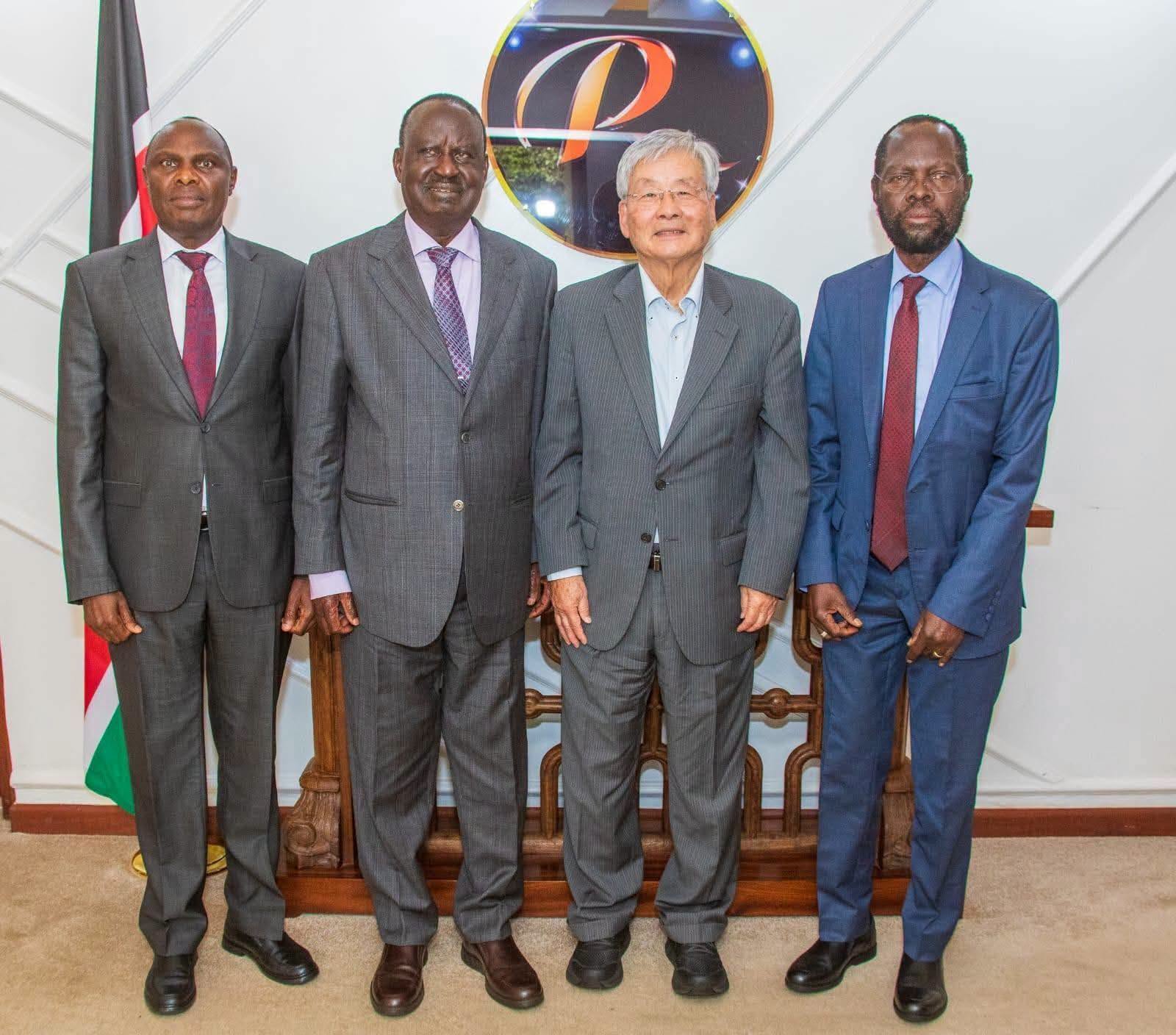
Exactly one month before his death, Raila Odinga convened a quiet meeting at his Capitol Hill office in Nairobi. Present were Kisumu Governor Prof. Anyang’ Nyong’o and Japanese political scientist Prof. Hiroyuki Hino, the scholar who had for years served as Raila’s trusted economic adviser. Head of Public Service Felix Koskei was also in attendance. Their discussion was about Kenya after Vision 2030, and that meeting now assumes a significance few appreciated at the time.
President Ruto announced that Prof. Nyong’o and Prof. Hino would help steer the conversation on Kenya’s next national vision. History has a habit of hiding its most important moments in ordinary meetings. This appears to have been one of them.
Raila’s greatest political legacy may ultimately extend beyond constitutional reform, opposition politics or his repeated presidential bids. Throughout his public life, he consistently challenged Kenya to think beyond elections, which he said come and go but Kenya remains. Whether one agreed with him or not, he insisted that the country required structural thinking for the future.
The conversation around a post-Vision 2030 Kenya fits squarely within that tradition.
President Ruto now finds himself carrying forward a conversation whose intellectual foundations were shaped across political divides. That deserves recognition because Kenya has rarely allowed ideas to survive the politicians who first championed them.
Countries that transform themselves do not change direction every time voters change governments. They build national consensus around long-term goals while allowing democratic competition over the best path to achieve them. That is precisely what Vision 2030 attempted. No doubt, its achievements are visible.
Modern highways cut across regions in Kenya once isolated by poor infrastructure. Ports have expanded. Digital connectivity has become part of everyday life. Electricity reaches millions more homes than it did two decades ago. Kenya’s infrastructure story has changed dramatically. But look, infrastructure alone cannot transform a nation.
Roads move people, yes, but again, institutions determine where those people ultimately arrive.
Vision 2030 imagined a more accountable, meritocratic and cohesive Kenya. On that front, the verdict remains unfinished. Ethnicity still shapes electoral competition. Public trust in institutions remains fragile. Young people continue to confront unemployment despite expanded educational opportunities. Economic growth has not always translated into shared prosperity.
In many ways, Kenya succeeded in constructing the physical architecture of development faster than it reformed the political architecture of governance. That is why the next national vision cannot simply be Vision 2040 or Vision 2050. Adding years to a calendar is not the same as producing a new philosophy. The Kenya that inspired Vision 2030 no longer exists.
Artificial intelligence is redefining work. Climate change is altering agricultural patterns that sustained communities for generations. Africa’s demographic surge is creating opportunities unknown to the architects of Vision 2030. Geopolitical competition is increasingly being fought through technology, data and supply chains rather than conventional diplomacy.
The next national vision must therefore ask different questions. Not simply how Kenya grows. But what kind of civilisation Kenya intends to become. Will it remain an economy exporting raw materials while importing innovation? Can it become a continental centre for knowledge, artificial intelligence and advanced manufacturing? Can it build institutions that outlive personalities? Can it finally break the cycle in which every election resets national priorities?
These are civilisational questions, and President Ruto’s greatest challenge will be persuading Kenyans that this conversation belongs to the nation rather than to his administration alone. A genuine national conversation must emerge from the public itself. That is perhaps why Ruto described the exercise as the most significant public participation process since the Constitution was adopted in 2010.